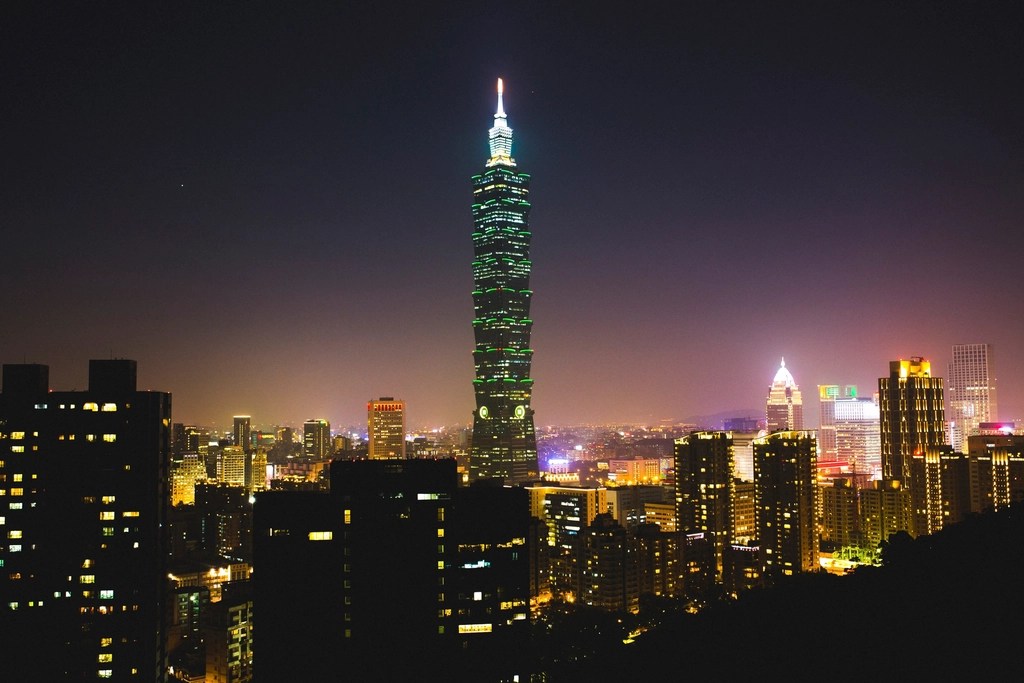
The recognition of Taiwan as an independent nation on the global stage is a contentious international issue rooted in the middle-twentieth century. Marked by decades of Japanese decree and centuries of Chinese rule, the answer to the debate of Taiwanese independence will be defined by the fundamental question: What defines a nation? According to the Cambridge Dictionary, a nation is “a country, especially when thought of as a large group of people living in one area with their government, language, traditions, etc.” This seemingly straightforward definition, however, belies the intricacies of nationhood, in which Walker Connor defines that a nation must be self-defined by an overwhelming mass of its citizens. Although Beijing claims that Taiwan is a subsidiary of the People’s Republic of China, studies have indicated that Taiwanese citizens view themselves as separate from China. Furthermore, through analysis of opinions from the Taiwanese, as well as Taiwan’s history, it is clear that Taiwan fulfills the requirements of nationhood: a distinct government, a united ethnic group, and the preservation and cohesion of culture to ultimately merit Taiwan’s recognition as an independent state.
Above all, Taiwan’s independence is underscored by its transition from a one-party authoritarian regime to a democratic system. As per the United Nations, a “democracy provides an environment that respects human rights… in which the freely expressed will of people is exercised”. This involves a crucial element: the “People have a say in decisions” including the selection of leaders and the freedom of the press (The United Nations). On the contrary, an authoritarian regime consists of one single entity, whether that be a party or a person that “governs the whole” (Maclay). To understand the causes and effects of the transition, it is necessary to understand the events that precipitated such reform.
Taiwan’s independence story stems from the signing of the Treaty of Shimonoseki in which the Qing Dynasty ceded authority over Taiwan to Japan until 1945. Under Japanese rule, Taiwan underwent educational, economic, infrastructural, and agricultural reform, ultimately transitioning Taiwan into the modern era (Pacific Front Untold). After Japanese sovereignty ended, Taiwan was returned to China which was ruled by the Kuomintang (KMT). As an attempt to eradicate Japanese traditions from Taiwan, assert Chinese dominance, and eliminate anti-China supporters, the KMT mandated “all the pre-college schools in Taiwan to provide a Chinese influenced education” (Anonymous). This led to students learning “biased history from the perspective of the KMT”, as well as reciting “patriotic songs on a daily basis” (Anonymous). In fact, to further diminish the amount of anti-government supporters, KMT president Chiang Kai-Shek secretly issued the murders of “an entire generation of leading figures, including students, lawyers, and doctors” (Brookings Institute). Moreover, there was a massacre on February 28, 1947 that wiped out most of the intellectuals and “opinion leaders” (Feng).
As the KMT was trying to fight Japan and control Taiwan at the same time, the Chinese Communist Party (CCP) overthrew their reign. As a result of this deposition, Chiang Kai-Shek and the KMT fled to Taiwan with the intention of salvaging their control over Mainland China. To achieve this goal, President Chiang Kai-Shek focused all of his resources on training for a better military, marking the occurrence of Taiwan’s military reform. Due to the fact that Mainland China was now represented by the CCP, the KMT who was ruling Taiwan, was expelled from the United Nations in 1971 (The Learning Network). Four years later, Chiang Kai-Shek passed away, and his son, Chiang Ching-Kuo assumed the role of President (Ohio State University). As president, Chiang Ching-Kuo prioritized the economy, and therefore, Taiwan’s focus on building a strong army to regain power over China lessened. As an attempt to grow Taiwan’s economy, Chiang Ching-Kuo proposed the construction of the “Ten Major Construction Projects”, marking the beginning of Taiwan’s thriving economy as infrastructure enables economic growth (Taiwan Panorama).
To everyone’s shock, President Chiang Ching-Kuo died of a heart attack in the middle of his presidency, causing Taiwanese-born Vice-President Lee Teng-Hui to assume his role (Office of the President of Republic of China). President Lee was a Taiwanese-born lawyer who grew up speaking both Mandarin and Taiwanese Hokkien, also referred to as “Taiwanese”. This influenced his perspective on the independence of Taiwan as he knew the distinctions between Taiwanese culture and Chinese culture. Also known as “The Father of Taiwan”, Lee depicted his style of leadership at an inauguration ceremony by contending that “democracy entails respect for individual freedom, social justice, and a sense of directly participating in the destiny of their nation” (Office of the President of Republic of China). Under Mr. Democracy’s (Lee Teng-Hui) rule, the KMT’s original goal to reclaim Beijing was canceled, and many laws were established to guarantee rights for Taiwanese citizens, including the termination of Taiwan’s previous one-party policy (United States Department of State). Perhaps the two most important rights were freedom of the press and the freedom to vote. This led to the emergence of the Democratic Progressive Party (DPP), which is a party that was previously underground due to the KMT being the only lawful government, marking the completion of Taiwan’s political reform.
Under this democracy, citizens are able to discuss their beliefs on Taiwan’s independence. The Election Study Center, National Chengchi University conducted a survey on 12,173 residents of Taiwan on whether or not they view themselves as independent. Out of this number, only 1.2% of interviewees wished for immediate unification with China, while around 88% did not wish to unify with China. Additionally, the Taiwanese Public Opinion Foundation revealed data that 78% of Taiwanese citizens view themselves as Taiwanese, whereas below 8% of inhabitants view themselves as Chinese. The graph also shows an upward trend in nationalism. To understand the reasoning of this, first-generation Taiwanese immigrant, Evelyn Kuo says that “the younger generation has been initiating countless activities physically or on the Internet to help promote [Taiwan].” Additionally, many contend the fact that “Taiwan operates completely differently from China” while interviewees of Asian Boss’s interview in Taiwan respond that “Taiwanese traditions and culture” are completely different from China’s. Interviewees also mentioned that “we (Taiwan) need no assistance from China as Taiwan is already operating well on its own laws and system”. In fact, when interviewing Chinese citizens in Mainland China, an interviewee said that “there is no point in unification if both sides are happy” (Asian Boss, China). To further support the definition of a nation, 81.2% of Taiwanese understand and speak the language of Taiwanese Hokkien, although not the dominant language (Wordspath). All in all, the numbers and the perspectives of the Taiwanese citizens manifest a distinct lifestyle when compared to those in China, showing a united ethnic group as Taiwan is “self-defined by an overwhelming mass of its citizens”.
The answer to Taiwan’s sovereignty comes down to its adherence to the definitions of nationhood. On the numerical side, the 13,976 square mile island accounts for 24 million people. Therefore, these numbers satisfy the dictionary definition of “a large group of people living in one area” (Cambridge Dictionary). Furthermore, Taiwan has its language, as well as a democratic government which contradicts China’s communist government. Taiwan also possesses unique traditions and an overwhelming majority of pro-Taiwan supporting citizens which ultimately merit Taiwan to be an independent nation. From Japanese influence to Chinese control, and later embracing democracy under leaders like Lee Teng-Hui, the national identity of Taiwan emerged as the overwhelming majority of Taiwanese citizens prefer a Taiwanese identity over a Chinese identity. With its own government, language, and traditions, Taiwan meets the basic criteria of being a nation, asserting itself as an independent nation in global discussions. However, it is necessary to reiterate and acknowledge that though Taiwan manifests itself as a nation, it is not internationally recognized as one.
臺灣邁向國家之路
Translated by Angelina Huang
對臺灣作為一個獨立國家的國際承認是一個根植於二十世紀中葉的有爭議的國際問題。臺灣經歷了數十年的日本統治和數個世紀的中國統治,關於臺灣獨立的爭論將由一個根本問題來決定:什麼定義了一個國家?根據劍橋詞典的定義,“一個國家,尤其是被認為是一大群人生活在一個區域內並擁有自己的政府、語言、傳統等。”然而,這個看似簡單的定義掩蓋了國家身份的複雜性,沃克·康納(Walker Connor)定義一個國家必須由其絕大多數公民自我定義。儘管北京聲稱臺灣是中華人民共和國的附屬國,但研究表明,臺灣公民認為自己與中國分離。此外,通過分析臺灣人的意見以及臺灣的歷史,可以清楚地看出臺灣具備了國家身份的要求:一個獨特的政府,一個統一的族群,以及文化的保存和凝聚,從而最終使臺灣有資格被承認為一個獨立的國家。
最重要的是,臺灣的獨立是由其從一黨專制政權向民主制度的過渡所強調的。根據聯合國的說法,“民主提供了一個尊重人權的環境……在這個環境中,人民的意願被自由表達和執行”。這涉及一個關鍵要素:“人民在決策中有發言權”,包括選擇領導人和新聞自由(聯合國)。相反,一個專制政權由一個單一實體統治,無論是政黨還是個人,”統治整體”(麥克雷)。要理解過渡的原因和結果,有必要理解促成這種改革的事件。
臺灣的獨立故事源於《馬關條約》的簽署,清朝將臺灣的主權割讓給日本,直到1945年。在日本統治下,臺灣經歷了教育、經濟、基礎設施和農業的改革,最終將臺灣帶入現代化(太平洋前線未述)。在日本主權結束後,臺灣被歸還給由國民黨(KMT)統治的中國。為了消除日本傳統在臺灣的影響,強調中國的主導地位,並消除反華支持者,國民黨要求“臺灣所有中小學提供具有中國影響的教育”(匿名)。這導致學生“從國民黨的視角學習偏見的歷史”,以及每天“背誦愛國歌曲”(匿名)。事實上,為了進一步減少反政府支持者的數量,國民黨總統蔣介石秘密下令“殺害整整一代的領軍人物,包括學生、律師和醫生”(布魯金斯學會)。此外,1947年2月28日發生的屠殺消滅了大多數知識分子和“意見領袖”(馮)。
在國民黨試圖同時與日本作戰並控制臺灣的過程中,中國共產黨(CCP)推翻了他們的統治。由於這種推翻,蔣介石和國民黨逃往臺灣,意圖挽救他們對中國大陸的控制。為了實現這一目標,蔣介石總統將所有資源集中在訓練更強大的軍隊上,標誌著臺灣軍事改革的發生。由於中國大陸現在由中國共產黨代表,統治臺灣的國民黨在1971年被聯合國驅逐出境(學習網絡)。四年後,蔣介石去世,他的兒子蔣經國擔任總統(俄亥俄州立大學)。作為總統,蔣經國優先發展經濟,因此臺灣恢復對中國的軍事力量的目標減少了。為了發展臺灣的經濟,蔣經國提出了“十大建設項目”,標誌著臺灣經濟繁榮的開始,因為基礎設施促進了經濟增長(臺灣全景)。
令人震驚的是,總統蔣經國在其總統任期中因心臟病去世,導致臺灣出生的副總統李登輝接任總統職位(中華民國總統府)。李登輝總統是一名臺灣出生的律師,他成長過程中會講普通話和臺灣話,也被稱為“臺灣話”。這影響了他對臺灣獨立的看法,因為他了解臺灣文化與中國文化的區別。也被稱為“臺灣之父”的李登輝在就職典禮上展示了他的領導風格,主張“民主意味著尊重個人自由、社會正義以及直接參與國家命運的意識”(中華民國總統府)。在“民主先生”(李登輝)的統治下,國民黨原本收回北京的目標被取消,並制定了許多法律以保障臺灣公民的權利,包括廢除臺灣之前的一黨政策(美國國務院)。其中兩個最重要的權利可能是新聞自由和投票自由。這導致了民主進步黨的出現,這個黨派之前是地下黨派,因為國民黨是唯一合法的政府,標誌著臺灣政治改革的完成。
在這種民主制度下,公民能夠討論他們對臺灣獨立的看法。國立政治大學選舉研究中心對12173名臺灣居民進行了關於他們是否認為自己獨立的調查。在這個數字中,只有1.2%的受訪者希望立即與中國統一,而約88%的受訪者不希望與中國統一。此外,臺灣民意基金會公佈的數據表明,78%的臺灣公民認為自己是臺灣人,而不到8%的居民認為自己是中國人。該圖表還顯示了民族主義的上升趨勢。為了理解這一點,第一代臺灣移民郭瑛玲說“年輕一代通過在現實中或互聯網上發起無數活動來幫助推廣[臺灣]”。此外,許多人認為“臺灣的運作方式與中國完全不同”,而《亞洲老闆》在臺灣的採訪中,受訪者表示“臺灣的傳統和文化與中國完全不同”。受訪者還提到“我們(臺灣)不需要中國的援助,因為臺灣已經依靠自己的法律和制度運作良好”。事實上,在採訪中國大陸公民時,一位受訪者表示“如果雙方都很幸福,統一沒有意義”(亞洲老闆,中國)。為了進一步支持國家的定義,81.2%的臺灣人雖然不是主流語言,但能夠理解和講臺灣話(Wordspath)。總而言之,臺灣公民的數字和觀點展現了與中國人相比的不同生活方式,顯示了臺灣是“由其絕大多數公民自我定義的”一個統一族群。
臺灣主權的答案取決於其是否符合國家身份的定義。在數字方面,13976平方英里的島嶼擁有2400萬人口。因此,這些數字滿足了詞典中“居住在一個地區的一個大群體”的定義(劍橋詞典)。此外,臺灣有自己的語言,以及與中國共產政權相對立的民主政府。臺灣還擁有獨特的傳統和絕大多數支持臺灣的公民,這最終使得臺灣有資格成為一個獨立的國家。從日本影響到中國控制,再到在李登輝等領導人下擁抱民主,臺灣的國家認同感逐漸形成,絕大多數臺灣公民更傾向於臺灣身份而非中國身份。憑藉自己的政府、語言和傳統,臺灣符合作為一個國家的基本標準,並在全球討論中確立了自己作為一個獨立國家的地位。然而,必須重申和承認,儘管臺灣表現為一個國家,但它在國際上並未被承認為一個國家。
Works Cited
The Brookings Institution. “Taiwan’s 228 Incident: The Political Implications of February 28, 1947.” Brookings, 22 Feb. 2007, http://www.brookings.edu/events/taiwans-228-incident-the-political-implications-of-february-28-1947/. Accessed 13 Nov. 2023.
Connor, Walker. “Terminological Chaos (‘A Nation Is a Nation, Is a State, Is an Ethnic Group, Is a …’).” Ethnonationalism: The Quest for Understanding, Princeton University Press, 1994, pp. 89–117. JSTOR, http://www.jstor.org/stable/j.ctv39x5s6.8. Accessed 22 Oct. 2023.
Election Study Center, National Chengchi University. “Taiwan Independence VS. Unification with the Mainland(1994/12~2023/06).” Election Study Center, National Chengchi University, 12 July 2023, esc.nccu.edu.tw/PageDoc/Detail?fid=7801&id=6963. Accessed 13 Nov. 2023.
Emily Feng. “Taiwan Marks the 76th Anniversary of the Start of the 228 Massacre.” National Public Radio, 28 Feb. 2023, http://www.npr.org/2023/02/28/1160009123/taiwan-marks-the-76th-anniversary-of-the-start-of-the-228-massacre. Accessed 13 Nov. 2023.
“Empire of Japan’s Aggression: Occupation of Taiwan.” YouTube, uploaded by Pacific Front Untold, 23 Jan. 2022, http://www.youtube.com/watch?v=013anJM-iog. Accessed 13 Nov. 2023.
Kuo, Evelyne. “My Country Is a Country.” Medium, 8 Nov. 2019, medium.com/evelynekuo/my-country-is-a-country-72da79c15fd8. Accessed 2 Oct. 2023.
Lake Forest College. “Taiwanese Hokkien (台語)” [“Taiwanese Hokkien (Taiwanese Hokkien)”]. Lake Forest College, http://www.lakeforest.edu/academics/majors-and-minors/environmental-studies/taiwanese-hokkienand160(%E5%8F%B0%E8%AA%9E). Accessed 13 Nov. 2023.
The Learning Network. “Oct. 25, 1971 | People’s Republic of China In, Taiwan Out, at U.N.” The New York Times, 25 Oct. 2011, archive.nytimes.com/learning.blogs.nytimes.com/2011/10/25/oct-25-1971-peoples-republic-of-china-in-taiwan-out-at-un/. Accessed 13 Nov. 2023.
Lee, Hsiang-Ting. “1976 Building the Future: Ten Major Construction Projects.” Taiwan Panorama, Dec. 2015, http://www.taiwan-panorama.com/en/Articles/Details?Guid=55e423d1-c5c2-4222-b8aa-bdbd01081c08&CatId=9&postname=1976%20Building%20the%20Future%3A%20Ten%20Major%20Construction%20Projects%20. Accessed 13 Nov. 2023.
Anonymous. Interview. Conducted by Anonymous, 12 Nov. 2023.
Lee, Teng-Hui. “總統在歐林講座演講” [“President’s speech at the Olin Lecture”]. Office of the President of Republic of China, 10 June 1984, http://www.president.gov.tw/NEWS/22622. Accessed 13 Nov. 2023.
Li, Dennis. “‘Always in My Heart’: Lee Teng-Hui’s Life in 10 Quotes.” Translated by Corey Lee Bell. University of Nottingham, 7 Aug. 2020, taiwaninsight.org/2020/08/07/always-in-my-heart-lee-teng-huis-life-in-10-quotes/. Accessed 13 Nov. 2023.
Maclay, Jeffrey D. Taiwan’s Transition to Democracy. Mar. 1997, apps.dtic.mil/sti/tr/pdf/ADA392930.pdf. Accessed 13 Nov. 2023.
“Nation.” Cambridge Dictionary.
The Ohio State University. “Chiang Kai-shek.” The Ohio State University – EHistory, ehistory.osu.edu/biographies/chiang-kai-shek. Accessed 13 Nov. 2023.
Taiwan Public Opinion Foundation. “March 2023 Public Opinion Poll – English Excerpt.” Taiwan Public Opinion Foundation, 21 Mar. 2023, http://www.tpof.org/wp-content/uploads/2023/03/20230321-TPOF-March-2023-Public-Opinion-Poll-%E2%80%93-English-Excerpt.pdf. Accessed 13 Nov. 2023.
The United Nations. “Democracy.” The United Nations, http://www.un.org/en/global-issues/democracy. Accessed 13 Nov. 2023.
United States Department of State. “Country Profile: Taiwan.” United States Department of State, 2001-2009.state.gov/r/pa/ei/bgn/35855.htm#:~:text=Until%201986%2C%20Taiwan%27s%20political%20system,political%20control%20of%20the%20island. Accessed 13 Nov. 2023.
“What the Chinese Think Of Taiwan | Street Interview.” Youtube, uploaded by Asian Boss, 3 Aug. 2022, http://www.youtube.com/watch?v=r2MlxzlHphY&t=631s. Accessed 2 Oct. 2023.
“What the Taiwanese Think Of China | Street Interview.” Youtube, uploaded by Asian Boss, 2 Jan. 2022, https://www.youtube.com/watch?v=C0YGLDafG1o. Accessed 2 Oct. 2023.
Wordspath Team. “What Language Is Spoken in Taiwan?” Wordspath, 13 Jan. 2023, http://www.wordspath.com/what-language-is-spoken-in-taiwan/#:~:text=The%20noun%20Taiwanese%20refers%20to,at%2083.5%25%20and%2081.9%25. Accessed 13 Nov. 2023.
Bibliography
“About Taiwan.” Life of Taiwan, lifeoftaiwan.com/about-taiwan/. Accessed 13 Nov. 2023.
Dahbour, Omar. “National Identity: An Argument for the Strict Definition.” Public Affairs Quarterly, vol. 16, no. 1, 2002, pp. 17–37. JSTOR, http://www.jstor.org/stable/40441311. Accessed 2 Oct. 2023.
Lake Forest College. “Taiwanese Hokkien (台語)” [“Taiwanese Hokkien (Taiwanese Hokkien)”]. Lake Forest College, http://www.lakeforest.edu/academics/majors-and-minors/environmental-studies/taiwanese-hokkienand160(%E5%8F%B0%E8%AA%9E). Accessed 13 Nov. 2023.
Anonymous. Interview. Conducted by Anonymous, 12 Nov. 2023.
Li, Dennis. “‘Always in My Heart’: Lee Teng-Hui’s Life in 10 Quotes.” Translated by Corey Lee Bell. University of Nottingham, 7 Aug. 2020, taiwaninsight.org/2020/08/07/always-in-my-heart-lee-teng-huis-life-in-10-quotes/. Accessed 13 Nov. 2023.
“The Culture and Traditions of Taiwan.” World Atlas, http://www.worldatlas.com/articles/the-culture-and-traditions-of-taiwan.html. Accessed 13 Nov. 2023.
“History of Taiwan.” Life of Taiwan, lifeoftaiwan.com/about-taiwan/history/#:~:text=Taiwan%20has%20been%20inhabited%20for,km%20off%20China’s%20southeastern%20coast. Accessed 13 Nov. 2023.
 ABTaiwanProject
Leave a comment