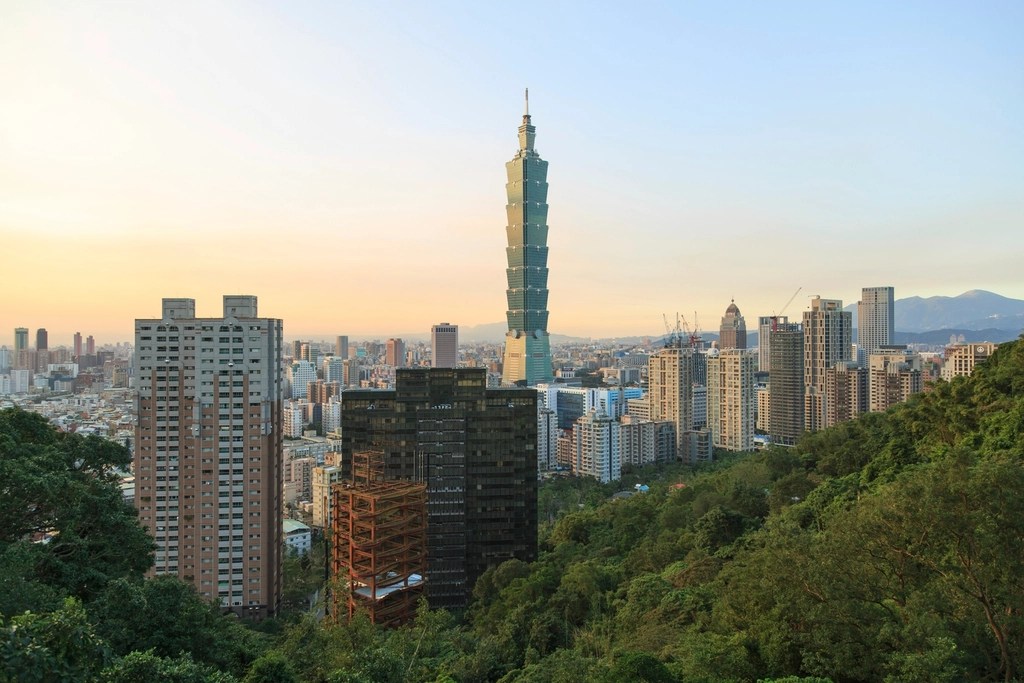
Taiwan’s new president, Lai, Ching-Te, or William Lai, has been sworn in to be the new president of the democratic island, a self-ruling country just a little over 100 miles off the coast of China in the Pacific. His inaugural address afterward was closely watched for signs of how he would navigate the complex relationship between the U.S. and China, as the world watches upon the geopolitical rivalry involving the world’s two biggest powers.
Lai, a medical doctor by trade from a poor mining family, served as the former vice president under the Tsai administration over the last 4 years. A military crisis 27 years ago in Taiwan Strait propelled the soft-spoken Kidney doctor into politics. Lai hung up his white coat to run for office – first becoming a legislator, then a popular two-term mayor of Tainan, before serving as the premier and – since 2020 – the vice president of incumbent President Tsai Ing-wen.
Lai Ching-Te, as the new president of Taiwan carries significant implications for both domestic and international politics. Domestically, Lai is known for his pro-independence stance, which may lead to a more assertive push for Taiwanese sovereignty. This could result in a shift in internal policies to strengthen national identity, bolster defense capabilities, and seek greater international recognition. Lai’s administration is expected to continue prioritizing economic growth and technological innovation, leveraging Taiwan’s position as a global leader in semiconductor manufacturing.
Internationally, Lai’s presidency is likely to heighten tensions with China, which views Taiwan as a breakaway province. Lai’s pro-independence rhetoric could provoke a more aggressive stance from Beijing, including increased military presence around Taiwan and intensified diplomatic efforts to isolate the island internationally. This situation could complicate Taiwan’s relations with other countries, especially those balancing their economic ties with China and their support for Taiwan’s democracy. Additionally, the United States and its allies may find themselves navigating a more complex geopolitical landscape, as they balance supporting Taiwan’s self-determination with managing their own relations with China. Lai’s presidency thus marks a potential turning point in cross-strait relations, with broad implications for regional stability and global geopolitical dynamics.
For Lai, then a fresh-faced doctor at a university hospital in the southern city of Tainan, that missile crisis became his “defining moment.”
“I decided I had a duty to participate in Taiwan’s democracy and help protect this fledgling experiment from those who wished it harm,” he wrote in The Wall Street Journal last year.
“I call on China to stop intimidating Taiwan verbally and militarily, and, together with Taiwan, to shoulder our responsibility to the world to do our utmost to maintain peace and stability in the Taiwan Strait and the region,” Lai said Monday in his inaugural address on an overcast day in Taipei. It was up to Beijing “to ensure that the world is free from the fear of war,” he said.
A bipartisan delegation of former senior U.S. officials has traveled to Taiwan for the inauguration, including former Deputy Secretary of State Richard Armitage. A senior Biden administration official told reporters last week that was in line with past practice.
In a statement, Secretary of State Antony Blinken congratulated Lai on his inauguration and said the United States looked forward to working with him “to advance our shared interests and values, deepen our longstanding unofficial relationship, and maintain peace and stability across the Taiwan Strait.”
China has been stepping up military and other pressure on Taiwan in recent years, particularly since then-House Speaker Nancy Pelosi visited the island in August 2022. It sends military warplanes and vessels toward Taiwan almost daily, with many of the planes crossing the median line in the Taiwan Strait that had long served as an unofficial buffer zone.
Lai, who has long faced Beijing’s wrath for championing Taiwan’s sovereignty, said as president he has “an important responsibility to maintain peace and stability in the Taiwan Strait,” pledging to pursue dialogue with China under the principles of dignity and parity. Lai rejects China’s sovereignty claims, saying only the island’s 23 million people can decide its future. The majority of Taiwanese want to maintain the current status quo and show no desire to be ruled by Beijing.
Though the U.S. does not have formal relations with Taiwan, it is the island’s most important international backer and arms supplier, having approved more than $8 billion in military aid last month. U.S. support is key for Taiwan as China pursues diplomatic isolation of the island, which is now recognized by only 12 governments around the world.
Lai will build on Tsai’s efforts to strengthen ties with the U.S., which doesn’t formally recognize Taiwan as a country but is bound by its own laws to provide the island with the means to defend itself.
 ABTaiwanProject
Leave a comment