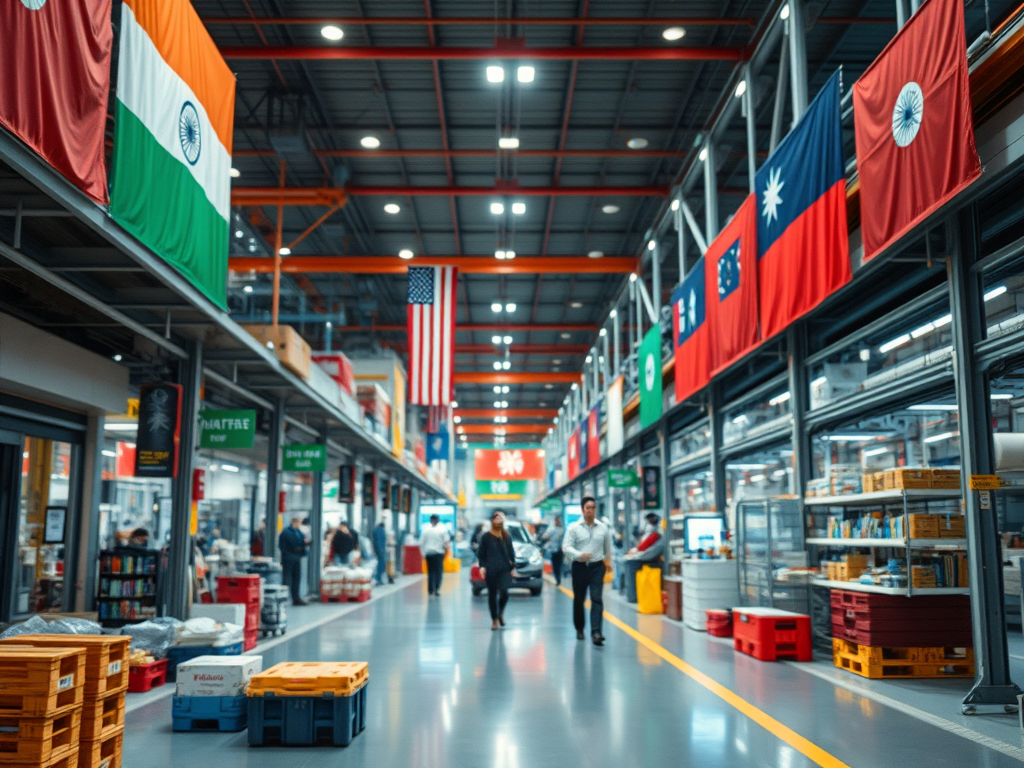
Before the 1990s, India and Taiwan relations were bearish, mainly due to Chinese economic policy towards the South China Sea. However, after the US entrance into the region, both have been willing to develop a relationship as a move to target Chinese aggression. It is only strategic that both nations invest in each other as growing technological superpowers. Criticism from China is persistent, given their sphere of influence on the region. That has made India reassess its relationship with Beijing as it strives to have closer ties with Taiwan.
Economics
It started with the “Look East Policy” in 1991, which enabled Taiwan and India to loosen visa restrictions. Since 1995, the development of trade and cultural centers, such as the Taipei Economic and Cultural Center in Chennai, between the two countries has facilitated bilateral exchanges through trade, investment, and technology. Collaboration between big companies in both countries has helped encourage communication between private sectors. That also helps diversify overseas market expansion and allows Taiwan to use India’s expansive network to access global trade and expand its economy, which helps to circumvent a lot of the economic restrictions placed on them by China.
Taiwan’s exports to India have reached almost ten billion US dollars, a 13% growth from the previous year. Approximately 200 Taiwanese businesses invested in sectors primarily in electronics, petrochemicals, and steel, which are key for infrastructure and their economies. Both sides have also explored the benefits of collaboration in medium and small enterprises; these include business incubation, technological assistance, and policy sharing. Taiwan and India hope to strengthen their ties to combat China’s economic dominance in the region, permitting Taiwan to compete globally.
Diplomacy
Taiwan and India have not officially created diplomatic ties; however, Modi — the current prime minister of India — recently won his election and was congratulated by Taiwan’s own William Lai. This comment was then followed by Modi stating he wants “closer ties” between the two governments as well as a “mutually beneficial economic and technological partnership.” As some of the largest democracies in Asia, they still maintain a steady foothold in the region without overextending themselves too far to enrage China.
India may also be moving toward Taiwan strategically; China has been escalating troops at the Sino-Indian border emboldening Modi to take steps in the opposite direction. For example, his ban on TikTok and willingness to trade with Taiwan more freely has irritated China mildly but allowed both countries to reap the benefits.
Culture
Cultural connections between the two countries have risen recently, highlighting the similarities that could draw them closer together. Ten Drum Art Percussion Group visited India in 2013. Youth ambassadors, sponsored by the Taiwanese Ministry of Foreign Affairs, frequently visit India to collaborate on policies and educational practices. Numerous corporations are invited to perform in India, such as the Zhen Yun Lin Ge Puppet Theater, and many others perform in festivals across both nations.
Furthering the connections between the two countries in more methods than one fosters a community of collaboration and cultural awareness that drives forward society. These two global technological superpowers furthering their economic relationship will allow for more microchip and semiconductor advancements. Their diplomatic relationships allow for the spread of democracy and peace in one of the most paramount geographical hotspots. Furthermore, as China ramps up aggression developing official diplomatic ties with India could be a useful deterrence.
 ABTaiwanProject
Leave a comment