Introduction
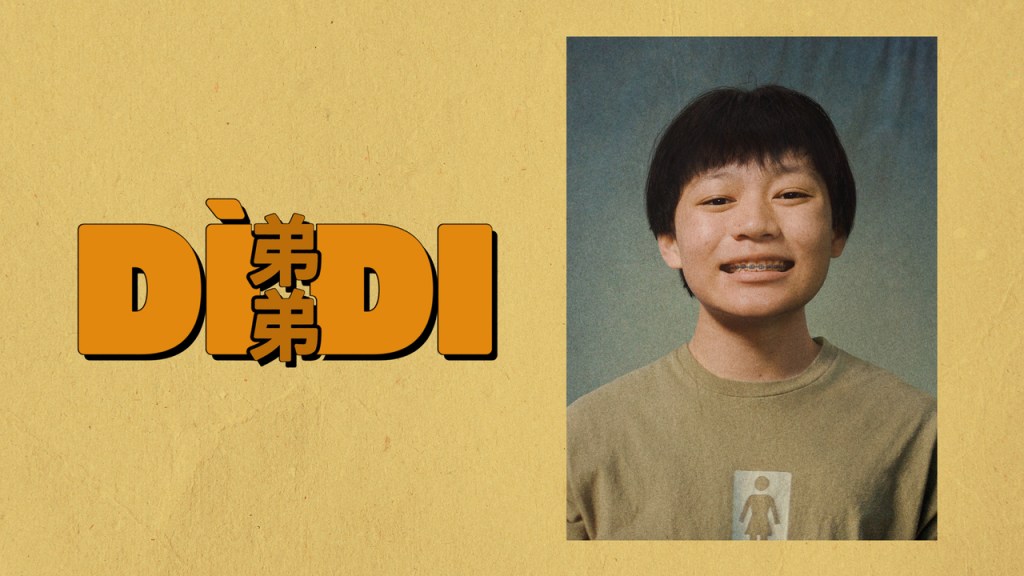
Dìdi, directed by Sean Wang, takes us through a summer journey of emotion and identity crisis with the eyes of a 13-year old, Taiwanese-American, Chris Wang. The setting is in Fremont, California in the year 2008. The film starts out with a clip of Chris and his friends, Fahad and Soup, blowing up a lady’s mailbox. The joy and craze seen in Chris’s face is expected from a teenager, but it gives the audience a sneak-peek into the absurdness of Chris’s teenage brain. Chris’s family are all going through their own individual calamity. Chris’s mother Chungsing Wang, a struggling artist and mom of the house, tries to balance out her career while making sure that her two indecipherable teenagers are well cared for. Chris’s sister Vivian, goal-oriented and academically successful, is in a state of stress as she is about to go to college, which is affecting her relationship with her brother. And Chris, a rising freshman, seeks acceptance from society and separates himself from his family and Taiwanese heritage. Sean Wang successfully depicts a troubled family facing life altering decisions and sacrifices, while maintaining a healthy family relationship.
Sean Wang succeeds in creating an emotional rollercoaster, flooding the audience with unexpected hate and violence and comforting understanding and love between family and friends. In Dìdi there are many references to the Taiwanese family ethic of indirect or invisible love. References like scolding one another, feeding each other food, or tightly holding on to someone’s hand all cause major character development, and eventually Chris will fall into the caring arms of the ones who love him most, his family.
Dìdi’s Message on Taiwanese-American Heritage
As a part of the Taiwanese-American community, Dìdi represents the hardship of a multi-generational family moving to America. For my parents, their Nai Nai was money, as moving to America meant that they would have to go through financial troubles. While Chris was growing up, it felt like nobody cared about him because he always received criticism and pressure to do better from his family. In my parent’s case, their hustle took them with it, meaning I was free from Kumon, Chinese Learning Centers (CLC), and Mandarin schools (thank god). My parents were also very “Asian” when it came to handling money. I recall asking my neighbor what he was going to write to Santa for Christmas, which was exactly 8 Bobbleheads. He told me to do the same, which was to ask for $300+ worth of plastic and springs. What did I receive? An additional $40 in my google spreadsheets bank account. What was my first thought? “Mom, Dad, Santa pisses me off.”
One of the main points that Director Sean Wang is trying to emit is that as the child of a Taiwanese immigrant, it’s hard to understand whether your parents actually love you or not. For Chris, he never understood that every time his mom asked him whether he had eaten yet or when his sister scolds him he was being loved. Instead, he thought it was their form of saying “you’re not good enough” repeated daily. For me, whenever I was being a complete dumbass, my parents would always say “笨.” In fact, one time I was in Taiwan doing some math homework at my Grandparent’s apartment. I have to admit, I got stuck on every problem. My mom very patiently took her time to call me “笨蛋“ and explain these numbers in a way not even Einstein could understand (if I recall correctly). Defeated, I rest my head on the table with my mom sitting to my right, when suddenly I hear my grandma say “笨.” Without looking up, I peek at my mom’s face and see her smiling, and at that moment, 7 year old Andrew almost cried. But now, 8 years later, I realize that that was just a message of love that I didn’t understand at that time, but my mom and her mom had already formed an understanding that those were words of love.
I think the most relatable thing about Chris is the fact that he never played with toys at home but instead played outside with his friends. Because Chris thought that his family didn’t care about him, he leaves home on a daily basis to meet up with his friends. And everytime he came home, his sister would ask him “Where were you?” or “Why are you outside this late?” I could tell that Chris was thinking “If you cared about me, you would know where I go and who my friends are.” I’m confident in my word that most asian kids have felt this way before, and it really is the worst when you feel like your parents don’t care about what you do but then you get scolded for being with the people who do care about what you do. If you compare Chris to Bonnie from Toy Story 3 & 4, you will notice that Chris is never hugged or held like a baby, while Bonnie always gets hugs and comfort from her parents. For Chris, he does not get enough love from his family, so he relies on friends to give him that love that he needs. On the other hand, Bonnie, who receives lots of love from her parents, plays alone in her room with her toys.
Altogether, Sean Wang does an excellent job in forming a depiction of a multigenerational Taiwanese-American family. A rousey Nai Nai, a struggling mother, and two crazy teenagers all trying to balance out their struggles with family. Through major ups and downs, Dìdi shows how the Taiwanese-American method of indirect/invisible love creates an everlasting bond of understanding between family members.
Summary of Dìdi
Chris lives in his own separate world. He feels like everybody, including his family, doesn’t understand him. The way he doesn’t eat, the way he cusses, how he steals his sister’s clothing, etc. The pressure and criticism he gets from his family results in him doing vicious acts like peeing in his sister’s lotion, smoking weed (one time), and trying to run away from his family. As a member of the audience, you would think that his family is at fault. But as a part of the Taiwanese-American community, I understand that all this pressure and criticism is just the way that they show love. Chris has yet to understand it.
In the very first scenes of the film, Chris, Vivian, Chungsing, and Nai Nai all sit at the dinner table. Vivian argues with Chris because he takes her clothes and sneaks into her room without her permission. Nai Nai criticizes Chungsing for not managing the family well, allowing the kids to cuss and argue. Nai Nai also forces Chris to eat which he does not like. To sum it up, there’s always complaining inside the home. Chris tries to get away from this and spends his time out late with his friends.
Throughout the movie, Chris meets new people, befriends them, messes up the friendship, and pushes his anger onto his mom and Vivian. There was a large contrast between at home Chris and outside Chris. While watching at the big screens, I could see that whenever Vivian or Chungsing was trying to help him, it appeared to Chris as just more criticism so he would always ignore their advice and go to his room. The entire theater groaned whenever Chris would ignore or block his family and friends, but you could not do anything except feel empathy for him. The buildup of emotion that weighed on Chris confused him and on multiple peak moments resulted in him screaming at his family for not listening to him and understanding him, when it was actually Chris who didn’t understand that this was just the way his family showed love.
After being screamed at individually by Chris, Vivian and Chungsing both realize how important it is to make Chris feel comfortable at home with them. Vivian because she is about to go to college and Chungsing because she feels obligated to manage her two kids and prove Nai Nai’s tiger-mom style of management wrong. They figure out that Chris doesn’t understand the Taiwanese-American ethics of non-verbal love or incredibly indirect care for one another. So they both find ways to get Chris to comprehend that he is being loved which is hilariously awkward.
For Vivian, it was an easy change because she once was in Chris’s shoes. She realized that Chris felt pressure to find friends and fit in. So when Chris was looking for a ride from his mom, who at the time was unavailable, Vivian offered to give him a ride to meet up with the skater boys without Chris asking. On the awkward, quiet ride, Vivian initiated a small conversation with Chris: “Are you feeling OK?” Chris, wide-eyed and startled by this sudden act of care he never could’ve imagined from his sister, mumbles “Yeah, I’m OK.” Due to the silence of that car ride, you could hear your viewmates. It was dead silent; everyone was paying their closest attention. The entire room was so proud of Vivian for getting Chris to understand that she loves him and cares for him and finally we see Chris showing some comprehensive skill to realize that his family loves him.
On the other hand, Chungsing had a difficult time getting Chris to understand. It wasn’t that she wasn’t willing but instead was due to her role as a mother. I couldn’t do anything except pity Chungsing. Whenever watching her kids fight, whenever Nai Nai called her useless and a terrible mother, whenever Chris ran away, she stood straight and strong. Her tears, ever so slightly visible, never fell. And before she could ever get Chris to comprehend her love for him, she had to end her mother-in-law’s nagging.
No she did not kill her, in fact, she didn’t have to do anything. Chungsing left the house for a day. Without Chungsing’s supervision, Nai Nai falls and helplessly lays on the floor for 3 hours until Chris finds her and immediately goes to assist her. Nai Nai who finally realizes that Chungsing is the only one capable of managing the family begins to show more respect to the mother of the home. Once Chungsing comes home to see Chris comforting Nai Nai beside her bed, she goes to hold Nai Nai’s hand who then squeezes Chungsing’s hand tightly to prevent her from leaving her side. This is a major turning point in the movie because without Nai Nai’s nagging, Chungsing can finally focus on Chris.
Chungsing’s approach to caring for Chris did not change, but instead Chris changed. Chungsing knew that her approach would work, because she already had succeeded in walking Vivian through her childhood. It was only a matter of time until Chris finally gave in to her and let her love him and care for him. Every time Chris got into his mom’s car, she would ask “Have you eaten yet?” Now, at the beginning of the movie, you would recall Nai Nai telling Chris to eat more, but Chungsing was different. This was her form of showing love to Chris, but Chris compared it to Nai Nai’s constant nagging.
There’s a critical point in the movie when Chris runs away from home for 3 days. When Chris finally decides to come home, he immediately goes to his mom’s room, where she sits comfortably on her bed, glasses on, tucked in, and reading a book. Chris calmly, on the verge of tears, asks why she didn’t go looking for him. Chungsing puts down the book, takes off her glasses and sits on the edge of the bed, inviting Chris to come sit next to her. She asks Chris if he remembers when Vivian tried to run away and he replies with a no. Chungsing explains to Chris how worried she was when Vivian didn’t come home, but when she did she felt so happy. She also tells Chris that she knows that he is less stubborn than his sister, which is why she knew Chris would come back. She then puts her arm around Chris’s shoulder and pulls him in tight, and whispers to him, “I’m so proud of you.” Chris, finally, understands.
 ABTaiwanProject
Leave a comment