By: Ishan Desai
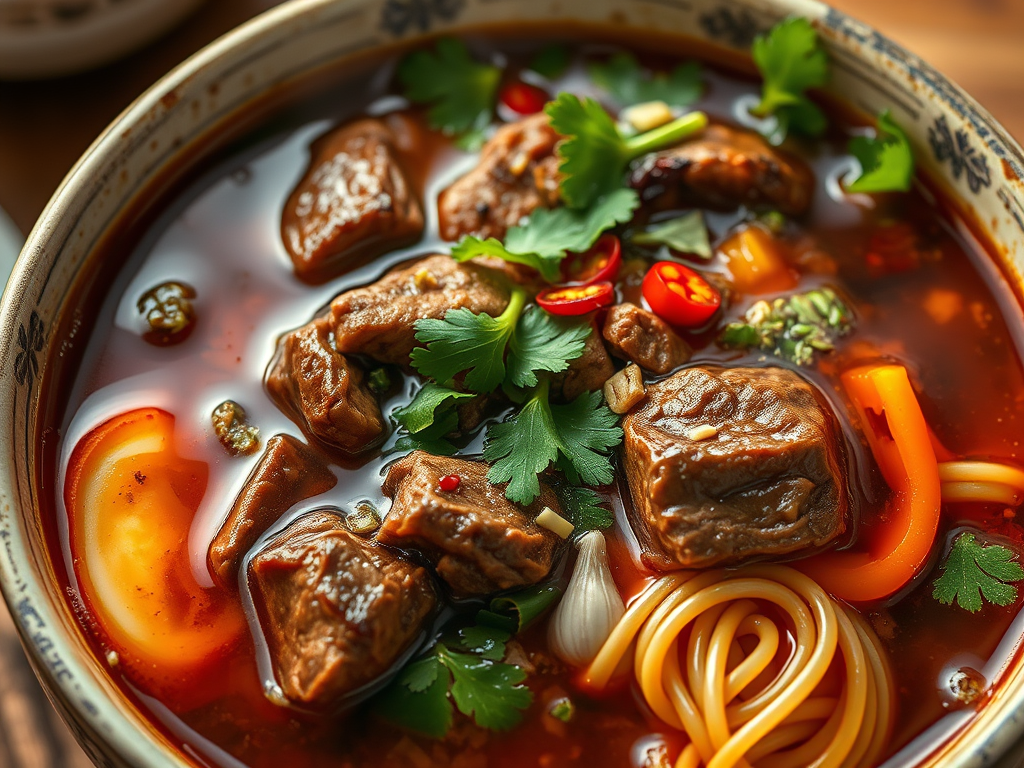
Beef noodle soup is more than just comfort food in Taiwan; it reflects the island’s history, diverse culture, and adaptability. Each ingredient, from the tender beef to the rich broth and chewy noodles, symbolizes Taiwan’s evolution. How the island has absorbed foreign influences, blended them with local traditions, and crafted something unique. This dish captures Taiwan’s complex identity, shaped by waves of migration, colonization, and globalization.
The beef in beef noodle soup tells a story of change and adaptation. In Chinese culture, particularly in the southern regions, beef was rarely consumed due to its agricultural value. The island’s relationship with meat evolved during the Japanese colonial era (1895-1945) when Japanese culinary traditions began influencing local diets. After World War II, when the Kuomintang fled to Taiwan from Mainland China, the influx of northern Chinese immigrants brought a greater appreciation for beef, which led to the widespread acceptance of meat as a staple ingredient. This marked a significant shift in local food culture. Today, beef in Taiwanese cooking symbolizes the island’s adaptivity while honoring its diverse heritage.
The beef noodle soup broth combines traditional Chinese and Taiwanese flavors, expressing the cultural blend that defines Taiwan. Classic ingredients such as soy sauce, star anise, cinnamon, and ginger emphasize the dish’s roots in Chinese cuisine. These spices are common in Sichuan and Northern Chinese cooking. These are regions that influenced Taiwanese food through migration. However, Taiwanese adaptations, like adding fresh tomatoes, lighten and sweeten the broth, providing a local twist. This fusion of ingredients reflects Taiwan’s ability to combine foreign and native influences, creating a rich and unique cultural identity. The layered flavors of the broth reflect the intricacy of Taiwanese history, where multiple influences coexist and enhance the culture.
Noodles are central to the dish and represent cultural significance in Taiwan. Noodles are a staple in Chinese cuisine and represent longevity and prosperity. The type of noodles can vary in beef noodle soup, reflecting Taiwan’s adaptability. Some versions of the dish use thick, hand-pulled wheat noodles from northern Chinese traditions, while others choose thinner, ramen-style noodles influenced by Japanese culinary techniques. This flexibility in noodle choice captures the essence of Taiwan’s culture, a balance of tradition and innovation, where old practices are respected, and new ideas are welcomed. As noodles are versatile, Taiwan’s culture is open to reinterpretation and evolution.
Using aromatics and spices like garlic, ginger, and chili peppers accentuates Taiwan’s agricultural abundance and evolving tastes. The island’s climate is ideal for growing herbs, spices, and fresh vegetables. Garlic and ginger, staples in Chinese cooking, add depth and warmth to the soup. Meanwhile, the recent addition of chili peppers, which give the dish a spicy kick, reflects Taiwan’s current food trends and its love for bold flavors. This shift towards spicier dishes is influenced by the popularity of street food, which is a vital part of Taiwanese culture. These bustling markets unite people, fostering community and connection through food.
Beyond the ingredients, beef noodle soup is a dish that symbolizes unity and identity in Taiwan. Despite Taiwan’s complex political status and diverse population, the dish is a unifying force bringing everyone together. It is enjoyed by people all around Taiwan, transcending class, ethnicity, and political divisions. In many ways, beef noodle soup is a culinary symbol of Taiwan’s stability, a country that has maintained its unique identity despite historical challenges and pressures.
The soup’s role in Taiwanese life goes beyond the kitchen. Every year, Taipei hosts an international beef noodle soup festival, where chefs compete to create the best version. This festival is not just about food; it celebrates Taiwanese culture, creativity, and pride. The competition attracts international visitors, showcasing Taiwan’s culinary prowess and solidifying beef noodle soup’s status as a national icon.
In conclusion, beef noodle soup is a dish that tells the story of Taiwan. From the choice of ingredients to the methods of preparation, it reflects the island’s journey through history—absorbing influences from different cultures, adapting them to local tastes, and creating something distinctly Taiwanese. It is a testament to Taiwan’s ability to balance tradition with innovation, a dish that brings comfort and warmth while representing the island’s complex and layered identity. With its rich flavors and cultural significance, beef noodle soup is a metaphor for Taiwan itself: a land of diversity, resilience, and an ever-evolving identity.
 ABTaiwanProject
Leave a comment