By: Aaron Wang
July 2025
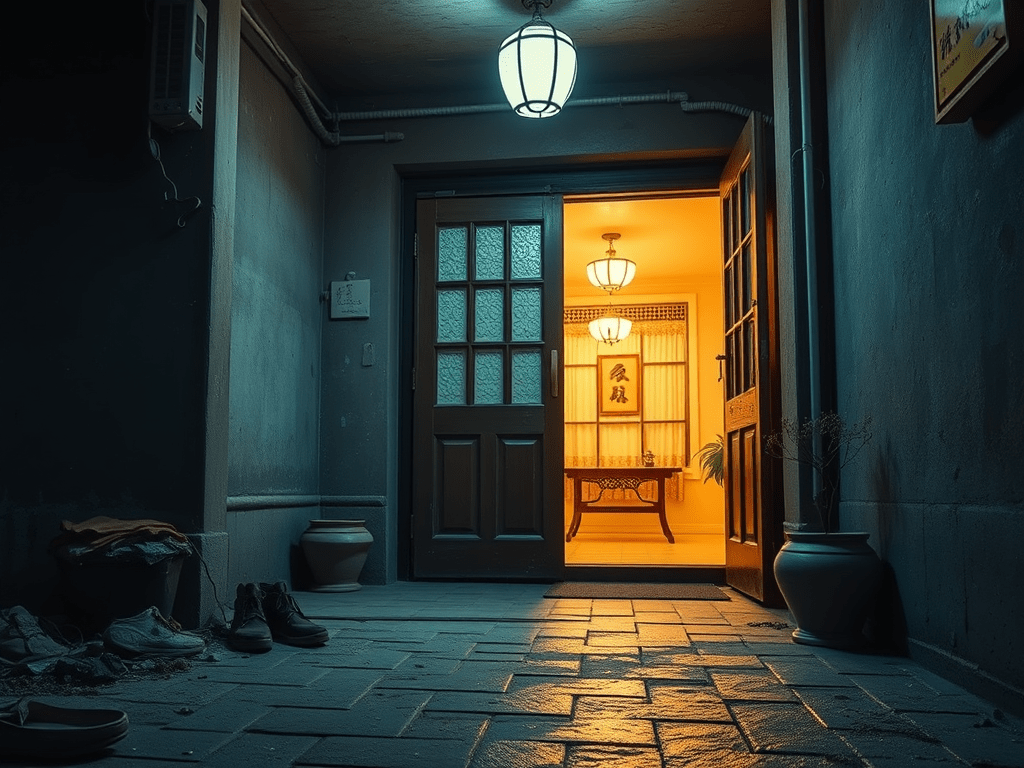
Enter my humble abode. Shoes must be off. No questions asked. No soles may touch upon the smooth umber wood.
It’s an unspoken tradition,at least in my household. But I have reason to believe that it is held as one of many stereotypes for the Asian household. In the 2015 sitcom Fresh Off the Boat, Eddie brings home his “girlfriend”, and his mom basically falls in love with her the second she slips off her shoes at the door. But stereotypes exist for a reason—especially when it leads to clean floors. Right?
Wrong. I’m scared of my floor. I don’t trust it—not in the sense that I think a sinkhole is going to open beneath me, but rather I don’t trust what’s on the floor. With a caking layer of unknown dust building on the soles of my feet, it is extremely uncomfortable to walk around. Jumping on the bed is off-limits. That uncomfortable embrace of particulate matter has become a common feeling in my house and it has become engrained in my brain such that I fully expect to feel that same embrace at any other house that upholds such a tradition. Maybe it’s just inevitable that grit finds its way in?
That streak has been broken. This summer, Evan (one of the founders of ABTaiwan) and I embarked on a three week trip to Taiwan to learn its history and culture while filming a documentary about what it means to be Taiwanese. We took in stories, food, and views, but one particular thing stood out: the floor.
At Chiayi, I stayed at some of Evan’s relative’s house and it was the same routine: I took my shoes off at the door. I was ready to don slippers as the arguably drab exterior and an army of unsolicited frogs guarding the entrance implied a gritty floor. I was wrong. It was spotless. The interior was bright with a warm glow and it felt welcoming. For the first time in years, I didn’t mind walking around barefoot. There was a certain je ne sais quoi that made it feel more than just clean or cozy. It almost felt like something to envy. Feelings aside, I now know that grit is not inevitable.
In fact, I’ve noticed this trend around Taiwan. Many buildings and restaurants sport extremely drab exteriors, some with bits of molding too! However, once one enters, the experience becomes golden. It’s not only restaurants. Homes in Keelung in the center of a smelly fish market containing extremely clean and cosy interiors. Sometimes, it seems that Taiwan’s powerwashing industry seems to be close to nonexistent.
That’s because I’ve observed the Taiwanese to be pragmatic. They put their efforts, money, and priority where it matters. For example, in the sphere of culinary arts, unlike many western peers that seemingly place priority on appearance, experience, and atmosphere, many Taiwanese restaurants place emphasis on their food and commitment to low prices rather than appearances. The very definition of “hole in the wall” many Taiwanese restaurants (obviously there are exceptions i.e some are pretty) are extremely busy yet they maintain the appearance that would not catch eyes. Yet they are committed to the essence of the restaurant–food!
Like my stay in Chiayi, the residents had no need to make their exteriors pretty. The efforts were all inside, as demonstrated by the immaculate floors. Maybe that’s why there is no powerwashing industry…Taiwan doesn’t need one!
Yet the Taiwanese also place effort and priority to areas that the many in the west may look upon as a waste of time: Conservation and sustainability. In the west, as evidenced with new policies that paint conservation and sustainability as “woke” and many in Europe complaining that environmental reviews stifle growth, the Taiwanese continue their commitment wholeheartedly, as demonstrated with action on the smallest things.
While attending an academic conference in Taichung regarding the history of Taiwan during WWII and Japanese occupation, I noticed a fascinating ritual after every lunch and dinner in the main hall. Methodically, all uneaten food was collected in a designated bin and bento boxes were stacked neatly. Obviously, waste was consciously being minimized. Everything had its place, and even the uneaten food seemed to serve a purpose, likely headed for compost. The entire routine reflected a mindset that consciously valued responsibility, mindfulness, and respect for what we consume.
I began to notice this same consciousness in everyday life across Taiwan. Maybe that’s why the rice bowls given at restaurants are tiny. These restaurants are not cheap, but they are encouraging diners to only take what you can chew, literally. After all, you can keep on asking for rice at no additional charge!
In fact, waste cutting doesn’t seem to stop at consumption. It spills into efficiency and transport. Taiwan’s MRT (Mass Rapid Transit i.e Metro), HSR (High Speed Rail), and integrated transit card is a testimony to that efficiency. Both MRT and HSR trains stop momentarily at stations, with MRTs stopping for a mere 10 seconds and HSR trains stopping for less than one minute. Time is of the essence, and these short stops are testament to that fact. But the cherry on top is the YoYo Card (Easy Card), or Taiwan’s transit card. Vetting commuters for bus rides, MRT rides, and Taiwan’s Rail authority, the Easy card is even deeply integrated into everyday shopping! Virtually all convenience stores accept the Easy Card, such as Seven Eleven, Hi-Life, and Family Mart. In fact, the Easy Card is the preferred way to pay. Seamless integration into not only transit but shopping bears witness to Taiwan’s drive for efficiency and pragmatism.
Where did we start? The floor? Oh yes, what started as a simple tradition of taking off one’s shoes is not only just representative of Taiwan’s well run country, but the Taiwanese drive for efficiency and pragmatism. From spotless floors that bless my feet hidden behind gray and gloomy exteriors to lightning-fast train stops, Taiwan truly has its priorities where it matters.
 ABTaiwanProject
Leave a comment