By: Evan Lee
First and foremost, I want to thank Father Barry Martinson and the Atayal tribe for the incredible hospitality that Aaron and I received during our recent stay in the mountain ranges of Chingquan, Hsinchu. A special thanks also to my friend Linda Gail Arrigo for encouraging us to connect with Fr. Barry.
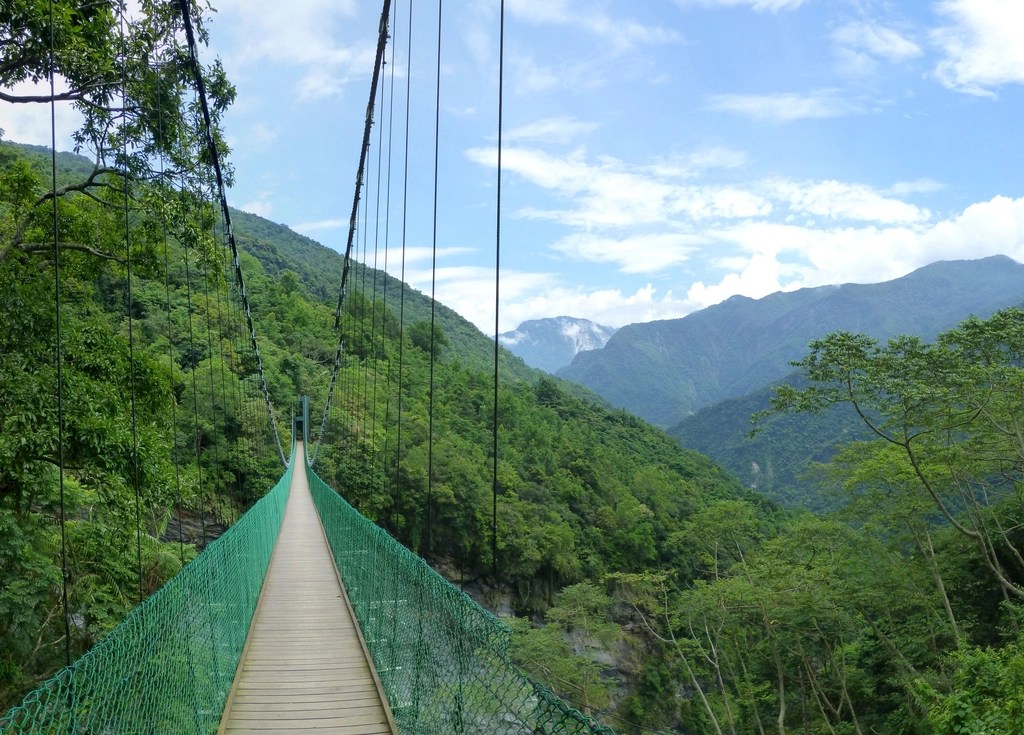
We were housed, fed, and accompanied—free of cost—by a warm, Christ-loving community in what may be the most beautiful part of Taiwan, if not the world
But beyond the beauty, what mattered most were the conversations. Through five documented interviews—some planned, some spontaneous—we gained a deeper understanding of Taiwan’s Indigenous history and traditions. Much of this knowledge remains underrepresented or undocumented in academic discourse, especially in Western scholarship.
Here are some observations:
1. Indigenous research, legacy preservation, and targeted government assistance are essential—not just for Taiwan’s tribes, but for the global understanding of cultural identity.
In college, I became interested in the ideology of American settler colonialism. When I searched for comparative perspectives (e.g., Taiwan), I discovered that Formosan settler colonialism was barely addressed in Western academia. Even in Mandarin, resources were scarce. So I went on-site.
What I found was both inspiring and troubling. Many tribal members are proud of their Indigenous identity—but some lack access to their own cultural stories and histories. In two of our casual conversations, interviewees said they always speak with foreigners about their Indigenous heritage. Yet when asked for specific stories, they couldn’t recall any.
This insight was later confirmed by Fr. Barry and Mr. Zhong (Zhong Haoyu), both deeply involved in cultural preservation. As Father Barry noted, “It’s hard to research a culture when even the people within it don’t fully understand their own identity.” I believe this is true for all people.
2. The root of the problem is largely economic.
With Taiwan’s national focus on tech and urban-centered progress, many Indigenous families face difficulty accessing well-paying jobs. This results in many parents being absent from their children’s lives, leaving churches and grandparents to raise the next generation. While these elders and communities provide love and support, the direct transmission of tribal language, stories, and practices is often interrupted.
The government is aware of this challenge, and tribal schools are working to continue the integration of cultural education into their curricula. Mr. Chung, one of the most brilliant young minds I’ve met, plans to teach at one of these schools after graduation. It’s people like him who make the future of Indigenous identity possible.
There are so many more cool and fun things I’ve learned, but I feel these are interesting observations. Follow the project on Instagram @888formosa
Until next time,
Evan
 ABTaiwanProject
Leave a comment