By: Erin Wong
Background
As Donald Trump cements his position as the 47th President of the United States, it is an undeniable fact, from either side of the political spectrum, that Trump has upended the playbook vis-a-vis global politics. Additionally, his unconventional approaches come during a time where the world is in a volatile state. With the backdrop of the Russo-Ukrainian war and a fragile ceasefire in the Israel-Hamas conflict, Trump’s actions have signaled an era of transactional diplomacy and mercantile alliances, sowing confusion and uncertainty among US allies regarding the reliability of US support. Outside of wars, however, there is another conflict simmering in the Pacific that is being affected by new US foreign policy: China-Taiwan relations.
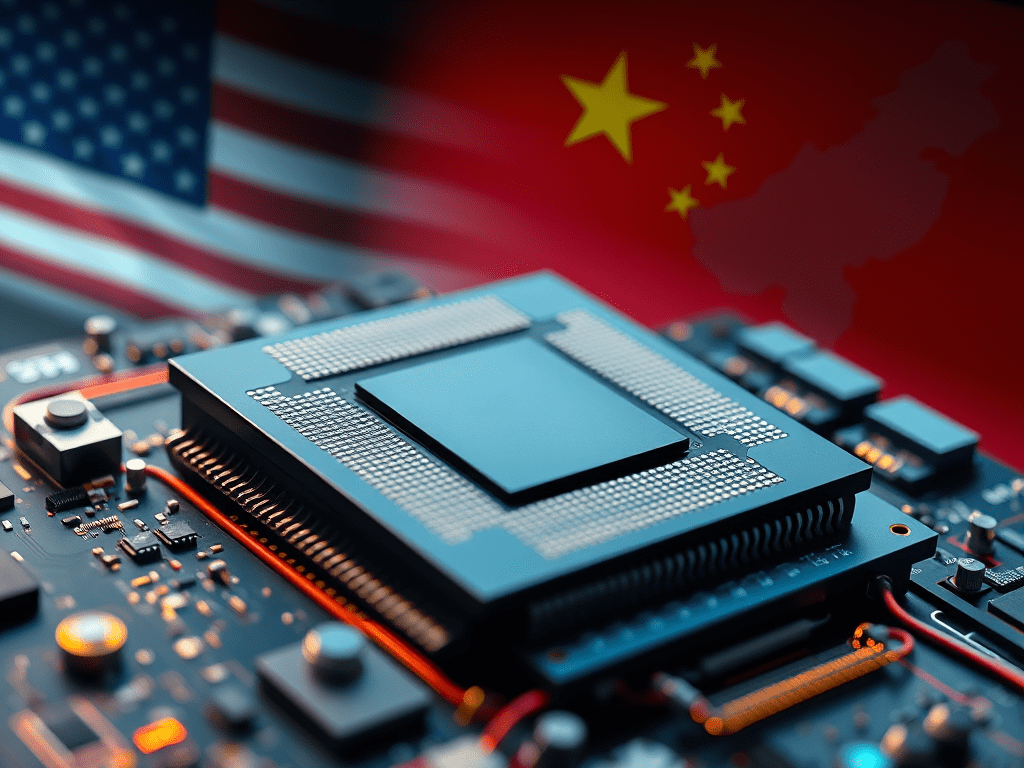
Taiwan has several unique aspects that warrants special US attention. Partly, it’s because Taiwan acts as a battleground between the US and China for hegemony and a field for China to test the limits of US support. But mainly, it’s because Taiwan holds one of the linchpins of the current US economy: AI. With major tech companies continuing to ramp up spending on AI with no indication of slowing, the chips that serve as the foundation of such computing power have become more vital than ever to the economy. However, despite heavy US private investment into that market, most of these chips are still produced outside of the US. Specifically, Taiwan produces 68% of the world’s chips and Taiwan Semiconductor Manufacturing Company (TSMC) produces 90% of the world’s most advanced chips that are needed for new AI development and innovation. However, because TSMC’s production environment and supply lines are all established in Taiwan, it makes it hard if not impossible to recreate TSMC’s success in such a short time domestically. As a result, due to such concentrated reliance, significant disruption in production of chips in Taiwan can have lasting and devastating impacts on the economy.
What Trump Wants
At the end of the day, it is unclear what Trump ultimately wants. Perhaps he truly wishes the best for his country. Or maybe he is merely seeking to consolidate power and to curry favor with the elite. Only time will tell–it’s too early to make any judgements.
But from what is observable, Trump has consistently pushed for the revitalization of the US domestic sector–particularly in manufacturing and technology. That is almost indisputable. With a 90 day tariff relief being announced on 9 April after going into effect on 5 April, Trump has companies scrambling to secure their supply lines in the US and to reduce their reliance on other countries.
Regarding semiconductors, Trump has recognized the liabilities that come with US dependence on Taiwan. So had Biden. During the Biden administration, the bipartisan CHIPS act was implemented to incentivize and subsidize domestic semiconductor production. Additionally, the Department of Commerce’s Bureau of Industry and Security (BIS) implemented export controls that prevented other countries from acquiring advanced chips to cement US leadership in tech. Furthermore, both Biden and Trump have encouraged TSMC to begin production in the US, with three fab (fabrication) factories being planned in Arizona. Additionally, Trump has hinted at plans to throw tariffs on chip imports to further consolidate domestic production. Trump’s intention to boost domestic production plays a key role in how this deal between Intel, TSMC, and Broadcom will play out.
The Silicon Shield
Taiwan has spent the past 40 years preparing its economy for semiconductor production despite seeing little immediate return. Now, those returns have materialized, with the chip industry accounting for approximately 15% of Taiwan’s GDP. Beyond the economy, Taiwan’s chip industry is a critical pillar of the island nation’s security, forming what is known as the Silicon Shield.
The general analysis is rather straightforward. Taiwan’s dominance in semiconductor manufacturing deters, or at least defers, China’s potential invasion of Taiwan. As China, along with the U.S. and many other nations, remains deeply reliant on Taiwanese chips, an invasion of Taiwan would disrupt the global supply chain, incentivizing foreign powers to intervene or dissuade conflict. Essentially, Taiwan’s chip dominance creates a strategic buffer, making military actions discouraged.
However, the Silicon Shield can erode, as the strength of this deterrent hinges on Taiwan’s exclusive control over its technological expertise. As a result, the push to diversify semiconductor manufacturing, particularly with the US effort to expand its domestic chip production, poses a threat to Taiwan’s leverage. If key production capabilities relocate, Taiwan could lose its unique position, and foreign powers may not be as keen to intervene. This dilemma presents itself with the rumors of an Intel breakup.
The Pivot of Intel—The Deal
Intel has fallen behind—it was not well positioned when the spending on AI began and has found itself unable to catch up. Additionally, with the three last CEOs focusing on only short-term strategies, Intel has no long term strategy to compete with Nvidia or TSMC. Even being removed from Dow Jones Industrial average in favor of Nvidia, Intel has missed the boat and failed to seize growth opportunities in emerging markets. Recent rumors have suggested that Intel is considering spinning off its foundry business to be acquired by TSMC.
Additionally, Intel has gotten a new CEO, Lip-Bu Tan, in hopes of revitalizing its industry. Tan has signaled support for this deal and has his priority set on reviving manufacturing and its foundry business. Intel’s current foundry business is having significant challenges competing with TSMC, so this deal would allow TSMC to undertake a joint venture with Intel so that Intel could focus on designing advanced chips.
Trump has signaled support for such a deal, if semiconductor production remains within U.S. borders. Specifically, preliminary discussions have proposed a framework where TSMC would manage Intel’s American factories by lending their expertise, thus ensuring that production remains domestically produced.
However, significant obstacles remain. For one, in the regulatory sphere, the US would scrutinize such a deal. The DOJ and FTC may deem that the acquisition would violate antitrust laws due to TSMC’s significant existing control in the market and the prospect of harming competition in the semiconductor market. Additionally, concerns regarding national security may arise because the integration of TSMC into Intel’s US production could lead to geopolitical implications, especially in relation to China.
Recommendations
How much does Taiwan stand to lose if TSMC lends their expertise to foreign countries? If Intel/TSMC’s foundry operations become intertwined with U.S. manufacturing, Taiwan may find itself gradually losing the technological exclusivity that undergirds the Silicon Shield. Especially with Trump’s unpredictable rhetoric regarding foreign policy, lending TSMC’s expertise to the US could accelerate the erosion of Taiwan’s semiconductor deterrence strategy and reduce the incentive for the US to come to Taiwan’s defense in the event of an invasion.
Taiwan faces several paths in its engagement with the United States:
Full Alignment
One option Taiwan can explore is to forgo its emphasis on its Silicon Shield and pivot itself to rely on the US, implying heavy commitment both militarily and economically. Japan provides a good example to showcase the benefits of fully committing to the US. As Japan has allowed for the construction of US military bases on its soil, signed trade agreements, and made heavy investments into the US, Japan has received heavy US support in return, including operation of the F-35 fighter jet and explicit US security guarantees in the 1951 US-Japan Security Treaty. While Trump’s stance on other international alliances has been somewhat unclear, Trump has made the commitment to Japan’s defense very clear.
Taiwan can try to do the same and fully cooperate with the Intel-TSMC deal, potentially even going beyond. This means that Taiwan should not withhold any expertise and to truly try to revamp US semiconductor production for the better. Although this would come at the expense of the Silicon Shield, the reward would be higher US trust and more credible US security guarantees.
However, there are some pragmatic issues. Full cooperation with the U.S. may not guarantee unwavering U.S. support. Partly, it’s because Taiwan’s citizenry distrusts the US regarding U.S. reliability. Many Taiwanese view the U.S. as uncredible, and there is a growing sentiment that wishes for closer ties to China, represented by the growth of the pro-Beijing KMT party. As a result, even with Taiwan’s full cooperation on semiconductors, the U.S. may still hesitate to offer Taiwan full US backing. Moreover, an explicit US defense commitment to Taiwan would invite strong intervention from China, which would complicate Taiwan’s security even further and complicate US reliability.
Rejection
Taiwan can also choose to outrightly reject this deal, refusing to cooperate with the U.S. on semiconductors but still signal cooperation on other matters. This approach, however, would not be looked upon favorably by the Trump administration, provoking a severe negative reaction. Just as with the meeting with Trump and Zelensky, Trump may perceive the rejection of such a deal as an act of disrespect. As a result, retaliation could follow, likely to be in the form of much fewer security guarantees and more tariffs. Additionally, Trump may try to signal disappointment and force a deal by relocating troops, reducing aid, and weakening Taiwan’s geopolitical position by leveraging Taiwan’s reliance on US security. Taiwan may find itself increasingly isolated or subject to economic and diplomatic pressure from hostile entities taking advantage of US backlash.
A Façade
Finally, Taiwan can try to present a fake façade of cooperation. In this scenario, Taiwan would allow TSMC to move forward with the deal and allow Taiwanese engineers to work with U.S. partners, signaling collaboration. However, TSMC would be privately instructed to withhold full expertise in the foundry business. The end goal is clear: to buy time. This strategy banks on the hope of a favorable change in U.S. leadership or policy in the future. Taiwan would avoid outright confrontation with China and wait for a more favorable U.S. administration that might be more sympathetic to Taiwan’s concerns. However, this strategy carries the risk of disappointing the U.S, because withholding expertise is not hard to point out by industry experts. Furthermore, another administration may continue a policy promoting domestic chip production at the expense of Taiwan’s national security.
The Main Point
Taiwan plays an indispensable role in the global economy, but under the Trump administration, things are quickly changing. The U.S. is seeking to reduce its reliance on Taiwan’s semiconductors, and thus Taiwan’s role in the global economy. Trump is at the forefront of this shift, leveraging policies that boost American manufacturing and diminish Taiwan’s leverage in the global supply chain. With the rumored breakup of Intel and its potential acquisition by TSMC and Broadcom, Taiwan faces a critical dilemma. From a preliminary analysis, Taiwan faces three choices that both have significant downsides. Whether Taiwan fully aligns with the U.S., outright rejects the deal, or adopts a strategic façade, the stakes are high and the results are uncertain.
 ABTaiwanProject
Leave a comment