In the modern international system, recognition is treated as a diplomatic formality: a stamp of legitimacy that confirms the existence of a “state.” Yet who receives recognition–and who does not–reveals far more about global politics than about the objective realities of statehood. Nowhere is this contradiction sharper than in the recent contrasting treatment of Palestine and Taiwan.
When France announced its intention to recognize a Palestinian state on September 22nd, it marked a symbolic turning point in modern European diplomacy. Long viewed as a cautious power, France’s decision opened a flood gate pf recognitions by other democracies, including the United Kingdom, Canada, Australia, and Portugal. At the United Nations General Assembly, applause followed, as though the mere declaration of recognition could conjure a state into being.
The United Nations first proposed partition in 1947, granting the Jewish and Arab communities separate states. The Jewish leadership accepted. The Arab states rejected the plan and launched a war of annihilation against the fledgling State of Israel. They lost, and would go on to lose every war they initiated in subsequent decades.
Twentieth-century social scientist Max Weber famously defined a state as a “compulsory political organization with continuous operations” and “a [successful] claim to the monopoly of the legitimate use of physical force in the enforcement of its order.” In the West Bank, the Palestinian Authority administers petty governmental affairs; In the Gaza strip, it administers nothing at all.
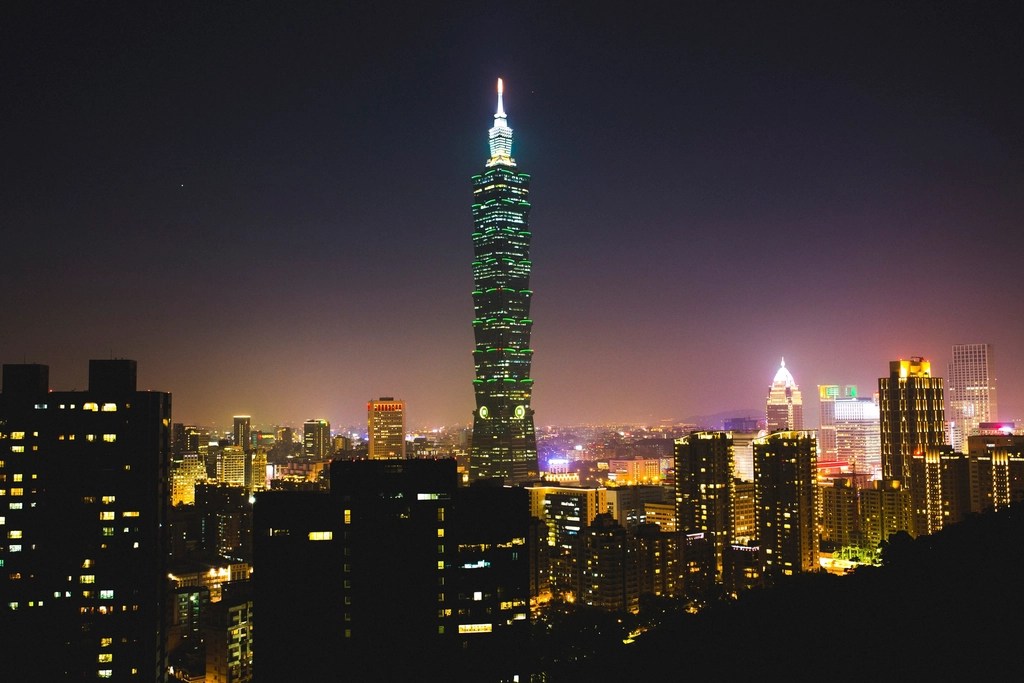
No entity of Palestine meets the international legal definition for statehood as laid down by the Montevideo Convention. No permanent population, no defined territory, no government, nor a capacity to enter into relations with other states. The paradox grows sharper when one looks eastward. Taiwan, officially the Republic of China, is the very opposite of Palestine: a real country denied recognition. Since 1949, it has governed the same defined territory, with a permanent population and its own armed forces. Its democratic transition in the 1990s transformed it into one of Asia’s most vibrant liberal democracies, pioneering same-sex marriage, promoting renewable energy, and defending global democracy abroad. Its economy, anchored by giants such as TSMC and Foxconn, outpaces that of many advanced European states.
Yet, only 12 nations maintain formal ties with Taiwan. Of the 157 that recognize Palestine, just nine extend recognition to Taipei. The reason is simple: Beijing’s coercion. The Chinese Communist Party, ruling without free elections since 1949, insists that no country may have relations with both Taiwan and the PRC.
This creates absurdities. The UN admits North Korea but not Taiwan. It grants Palestine observer status but denies a seat to a country richer and freer than most of its members. Meanwhile, Beijing, the very dictatorship threatening Taiwan’s existence, holds a permanent UN Security Council seat and veto power, ensuring that Taiwan remains silenced on the world stage.
Even more ironic, in 2023, Palestine and China elevated their relationship to a “strategic partnership,” with Ramallah affirming Beijing’s claim that Taiwan is an “inalienable part of China.” Maps released by the Palestinian mission at the UN now fold Taiwan into PRC territory, erasing its sovereignty entirely. This is despite the fact that Taiwan has donated to humanitarian relief in Gaza.
If recognition is meant to reward legitimacy, then the current system is inverted. Palestine, a divided and authoritarian entity with no monopoly of violence, no defined borders, and a leadership allied with dictatorships, receives near-universal recognition. Taiwan, a functioning liberal democracy with rule of law, civil liberties, and a thriving economy, is denied the same.
The Palestinian Authority has produced two leaders in nearly thirty years: Yasser Arafat and Mahmoud Abbas, the latter now in the twentieth year of a four-year term. Both cultivated ties with tyrants abroad, rewarded terrorism at home, and presided over stagnant, corrupt governance. By contrast, Taiwan’s peaceful democratic transitions, active civil society, and commitment to global norms mark it as a textbook case of statehood and legitimacy.
Recognition of Palestine reflects fear and appeasement. The refusal to recognize Taiwan reflects the same. In both cases, democracies sacrifice principle for convenience, rewarding coercion instead of resisting it.
If the world were serious about justice and stability, it would reverse these priorities. It would recognize Taiwan for what it is and cease the charade of statehood for an authority that neither governs effectively nor aspires to coexistence. Until democracies find the courage to align recognition with reality, they will continue to undermine their own credibility and embolden the very forces they claim to resist.
References
https://www.washingtonpost.com/opinions/2025/08/14/taiwan-palestine-recognition-democracy-china/
https://www.taipeitimes.com/News/front/archives/2025/09/27/2003844502
https://thehill.com/opinion/international/5518413-palestine-state-recognition-taiwan/
 ABTaiwanProject
Leave a comment