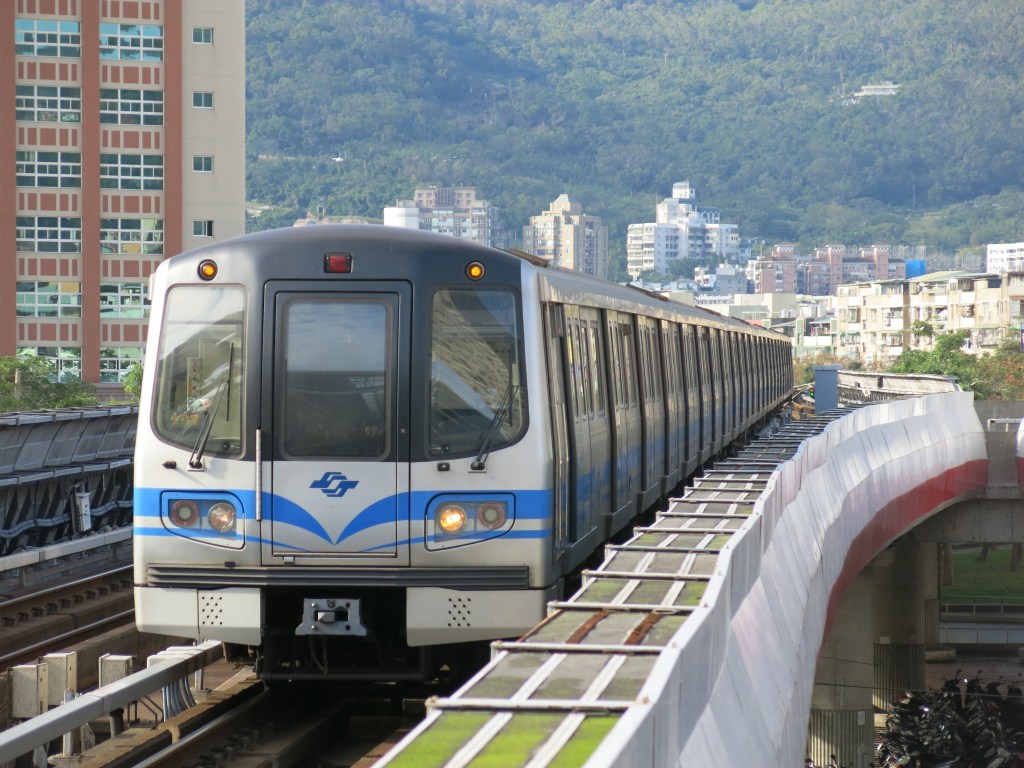
If you’ve ever landed in Taipei, tapped an EasyCard, and slipped onto an MRT train within minutes, you already know the feeling: a kind of calm efficiency that’s so seamless, you almost forget how remarkable it is. The Taipei MRT has become so good, so dependable, and so deeply woven into daily life that most people barely notice how extraordinary it truly is.
But step back for a moment and compare it to the world’s other transit systems — especially the ones in the U.S., where building even a short extension takes decades (hello Chapel Hill light rail) and Taiwan’s achievement starts to glow.
Taipei’s MRT consistently ranks among the highest-rated metro systems in the world, but that doesn’t fully capture the lived reality. The trains show up when they say they will — always. You can leave your home at 7:52 and know, with full confidence, you’ll catch the 7:55 train. The system’s on-time rate hovers around 99% year after year, and delays longer than five minutes are so rare they make the news.
And then there’s the cleanliness. The floors shine, the seats look new, the stations feel safe enough that families, students, and grandparents roam freely late into the evening. You never deal with trash, graffiti, or broken escalators that stay broken for months. Instead, the vibe is: “We take care of this because it takes care of us.”
It sounds simple, but this level of reliability changes a city. It builds trust. It creates stability. It lets people move freely and live more widely. It lowers stress. It gives every rider, no matter their background, the same promise: you’ll get where you need to go.
After decades of traffic congestion and rapid urban growth, Taipei’s government decided in the late 1980s that enough was enough. They committed to a bold plan: build a world-class metro system, maintain it fiercely, and treat it as a public good rather than an afterthought.
But what makes Taiwan’s approach stand out is the way it stuck with the mission. Most countries build transit in waves, losing momentum and institutional knowledge between projects. Taiwan didn’t. Once construction started, it basically never stopped. Engineers learned from every line, every curve of track, every soil challenge. Contractors got faster and sharper, government agencies refined the permitting process, and because the government funded the infrastructure itself, operators could focus on running a great system instead of digging themselves out of debt.The result is a rare thing: a country that got better at building by continuously building.
The MRT reflects something deeply rooted in Taiwan’s culture — a quiet pride in doing work cleanly, precisely, and responsibly. The same mindset that keeps streets orderly, restaurants spotless, and night markets running like clockwork shows up in the transit system too.
When images of the new Yellow Line started circulating, people outside Taiwan were stunned by how quickly it appeared and how polished the stations looked. Elevated tracks winding through dense neighborhoods, double-deck viaducts, deep foundations in soft soil — and somehow, it all came together smoothly.
More than anything, the Taipei MRT succeeds because it respects the people who use it. It treats riders like citizens, not burdens. It’s designed for convenience, not compromise. And it’s built on the belief that a public service should serve — not frustrate, exhaust, or complicate.
You feel this respect when the train pulls up exactly where it’s supposed to. When the platforms are spotless. When the air smells clean instead of metallic. When you see grandparents taking the escalator without fear, or schoolkids navigating the network like pros.
Taipei’s MRT doesn’t demand gratitude. But if you’ve ever lived in a city with bad transit, you’ll understand what a miracle it is.
Behind the trains, the tunnels, and the endless hum of air-conditioned platforms is a bigger truth: Taiwan knows how to build things that matter. It knows how to invest in the long term. It knows how to take public infrastructure seriously.
At its heart, the Taipei MRT is a portrait of the island’s values — thoughtful, efficient, cooperative, quietly excellent, and deeply caring toward the people who call this place home.
It is, without exaggeration, one of Taiwan’s greatest modern achievements.
 ABTaiwanProject
Leave a comment