By Andrew Zverkov
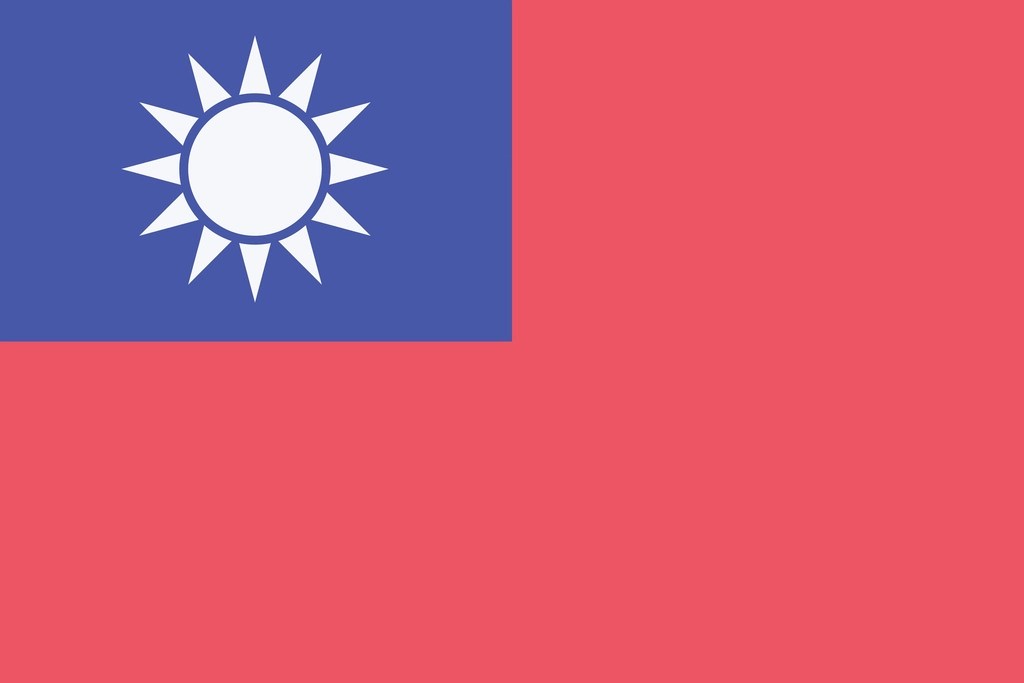
Taiwan, officially known as the Republic of China (ROC), is an island nation located in East Asia. Taiwan has a complex and fascinating history, including periods of colonization, occupation, and struggle for independence. Its relationship with China, in particular, has been a defining feature of its history and continues to shape its politics and international relations to this day. The relationship between China and Taiwan has been complex, with both sides claiming sovereignty over the other. In recent years, significant changes have occurred in both China and Taiwan, affecting the relationship between the two entities.
In 1895, the Qing dynasty ceded Taiwan to Japan following its defeat in the First Sino-Japanese War. Japan ruled Taiwan for the next 50 years and implemented various policies to modernize and develop the island. They built new roads, railways, schools, hospitals, and industries, and introduced new technologies and ideas. However, the Japanese also suppressed the Taiwanese people’s culture and identity, and forced them to adopt Japanese customs and language.
At the end of World War II, Japan was forced to return Taiwan to China. The Nationalist government of China, led by Chiang Kai-shek, took control of the island and the Chinese mainland. However, the strengthening of the People’s Republic of China, led by Mao Zedong, ultimately led to the defeat of Chiang Kai-shek. According to the BBC, “Chiang Kai-shek and what was left of the nationalist party – known as the Kuomintang – fled to Taiwan,” (Brown, China and Taiwan: A really simple guide). While in Taiwan, Chiang Kai-shek sought to overtake the People’s Republic of China. The Korean War would turn the fight against communism to the Pacific, causing The US to become allies with Taiwan and recognize them as an independent country. This flared Taiwan’s relations with mainland China as both sides claimed to be the legitimate government of China. The Nationalist government of Taiwan, also known as the Republic of China (ROC), was recognized as the official government of China by many countries, including the United States. However, the People’s Republic of China (PRC), which was established in 1949 by the Communist Party, “views the island as a renegade province and vows to eventually “unify” Taiwan with the mainland,” (Maizland, Why China-Taiwan Relations Are So Tense).
In 1971, the United Nations recognized the PRC as the official representative of China and expelled the ROC from its membership. This marked a turning point in Taiwan’s international relations, as many countries shifted their recognition from the ROC to the PRC. However, the United States maintained diplomatic relations with the ROC and continued to provide military and economic support to Taiwan as a strategic ally in East Asia.
In the 1980s, Taiwan began a process of democratization, “Martial law, in effect since 1949, ends and bans on the formation of new political parties and news publications are lifted. Democratization goes into high gear,” (Taiwan.gov.tw., Government Portal of the Republic of China (Taiwan)). As the government allowed more political freedoms and allowed opposition parties to participate in elections, the rise of new parties, like the Democratic Progressive Party (DPP), further advocated for Taiwan’s independence and challenged the Nationalist government’s claims to represent all of China. In the 1990s, Taiwan’s relations with mainland China improved, as both sides sought to reduce tensions and promote economic cooperation. In 1992, representatives from the ROC and the PRC held talks in Hong Kong and reached a consensus known as the “1992 Consensus,” which acknowledged the existence of “one China” but allowed each side to interpret what that meant, causing more disagreement in the region.
However, tensions between the two sides have continued to simmer, especially as the DPP has gained more political power and advocated for greater independence. In 1996, The PRC responded by conducting multiple missile tests off the coast of Taiwan to display its military power and to show its willingness to use force to reunify with the island. In response, the US responded with the biggest display of Military might in Asia since the Vietnam War.
In 2005, China passed the anti-secession law that authorized the use of force if Taiwan were to become independent. The current situation between Taiwan and China is coming very close to war as “China has held its biggest-ever show of military force in the air and seas around Taiwan, including the firing of ballistic missiles… following a visit to the island by the Speaker of the US House of Representatives, Nancy Pelosi,” (Brown, China and Taiwan: A really simple guide). Nancy Pelosi’s visit shows that the US is still willing to work with Taiwan as a strategic partner in the pacific and also as an economical partner as well. According to the BBC, “a single Taiwanese company – the Taiwan Semiconductor Manufacturing Company – has over half of the world’s market,” (Brown, China and Taiwan: A really simple guide). A Chinese takeover in Taiwan could give Beijing more control over the semiconductor industry, which would affect the world’s entire economy.
In China, the government has pursued a policy of social control, cracking down on dissent and limiting free speech. The government has also implemented a “social credit” system, which assigns citizens a score based on their behavior, with low scores resulting in restrictions on travel and other privileges. On the other hand, Taiwan’s social changes have been driven by the younger generation, which has been increasingly vocal in its support for independence and democracy. The younger generation has also been pushing for social reforms, including LGBT rights and gender equality; “A special law legalizing same-sex marriage is passed, making Taiwan the first country in Asia to allow LGBT unions,” (Taiwan.gov.tw., Government Portal of the Republic of China (Taiwan)). China is a communist society that blocks freedom at all costs while on the other hand, Taiwan is a democratic society led by the younger generation who are open to free speech and a more modern, progressive form of thinking. These differences continue to pull the two nations apart and further cement each other’s independence from one another.
The history of Taiwan and its relation with China is a complex one, shaped by centuries of migration, colonization, and political changes. Today, Taiwan is a prosperous and democratic nation that plays an important role in regional and global affairs. Its relations with mainland China remain a key challenge, as one side escalates the problem and the other tries to de-escalate. As long as the US maintains allies with Taiwan, China will have to think twice about invading Taiwan.
Annotated Bibliography
Brown, David. “China and Taiwan: A really simple guide.” BBC, 8 Aug. 2022,
http://www.bbc.com/news/world-asia-china-59900139. Accessed 15 Mar. 2023.
This source is credible because it was written by a senior journalist at BBC who has spent
his whole life creating reliable news stories. This article is a basic summary of the current and past status of Taiwan and China. This website gathers its information from Chinese, Taiwanese, and US government sources. This source will be useful to learn about the current status of Taiwan and China.
Fenby, Jonathan. Chiang Kai Shek: China’s Generalissimo and the Nation He Lost.
New York City, Carroll & Graf, 2004.
This source is credible because it is a biography that tells the story of Chiang Kai Shek and his political role in Chinese history from various sources and reliable first hand accounts. Jonathan Fenby is a very credible autobiography writer and has written many books specializing in Chinese affairs. This source will be useful to learn about the Chinese Revolution and how Taiwan became a separate country.
Maizland, Lindsay. “Why China-Taiwan Relations Are So Tense.” Backgrounder,
Council on Foreign Relations, 3 Aug. 2022, http://www.cfr.org/backgrounder/
china-taiwan-relations-tension-us-policy-biden. Accessed 15 Mar. 2023.
This source is credible because it was written by a senior writer that obtained a Bachelor degree in international relations and journalism from American University. This article writes about the relations between Taiwan, China, and the US. This source will be useful to know more about the background and current status of US relations with Taiwan.
Taiwan.gov.tw. Government Portal of the Republic of China (Taiwan), 1 Jan.
2023,www.taiwan.gov.tw/content_3.php#:~:text=The%20ROC%20government%20relocated%20to,rule%20of%20a%20different%20government. Accessed 15 Mar. 2023.
This source is credible because it comes directly from the Taiwan government and is a first hand account of the history of Taiwan from the perspective of Taiwan from the Taiwan archives.. This article recounts the major events in Taiwanese history for almost every year of their existence. This source will be useful to find out how China was related to the creation of Taiwan and the conflicts between them.

 ABTaiwanProject
Leave a reply to 哪一個朝代最久? – 知識星球 Cancel reply