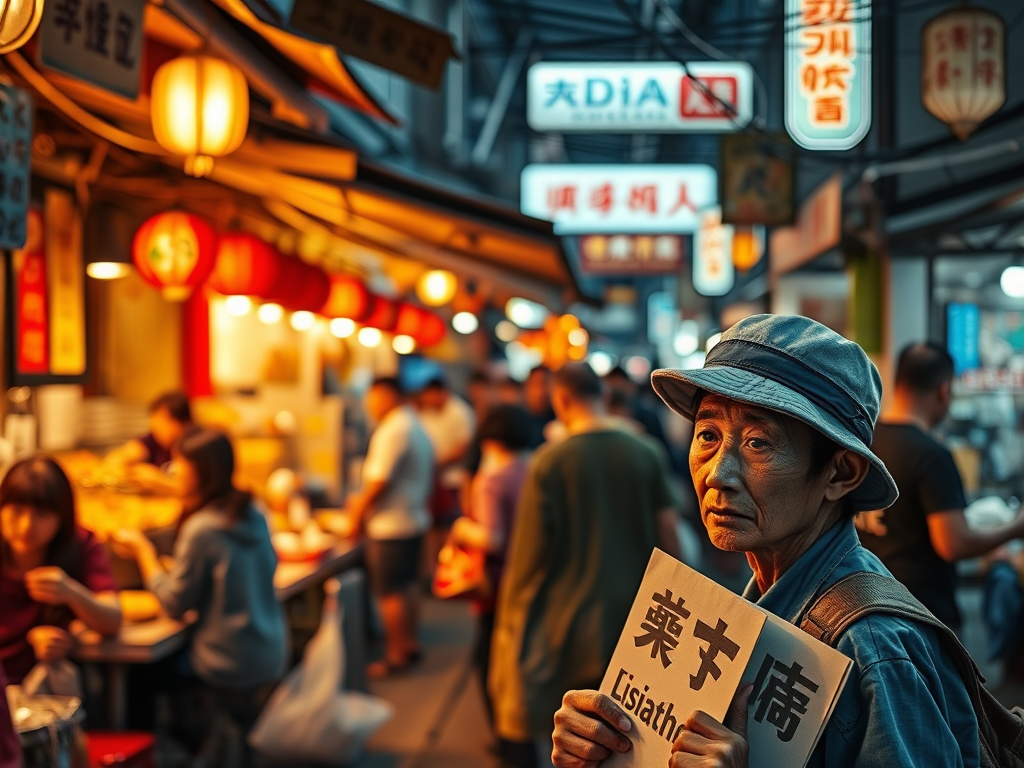
By: Erin Wong
Taiwan is seen as a prosperous country–with their boba shops, their semiconductors, its night markets, and beautiful landmarks. Its strong academic system boasts outstanding students, cultivating an image of itself as a well-rounded and successful country.
Yes. These are all true. But with every successful society, the other side of the coin illustrates a shocking story compared to the success portrayed. Taiwan is no different. Its other side of the coin, from poverty, lack of social mobility, and an aggravated inequality issue, may come as a shock. Despite these issues universally plaguing developed countries, this problem cannot be solved without awareness. This article aims to establish that awareness. Change can happen later and must happen at a higher level in tandem with grassroot movements, but actions require one to be informed.
However, to keep the issue properly scaled compared to other countries, Taiwan’s poverty and economic woes are significantly better than other countries such as the US. However, these marginalized people ought not to be disregarded.
Poverty in Taiwan
Current Statistics and Trends
While Taiwan has a strong economy and focused economy, poverty remains an issue. In 2023, an NGO survey found that 9% of the Taiwanese population claimed to live under the poverty line. Conversely, the government has given a much lower number, with an official poverty rate of 2.6%, or around 600,000 people. If the 9% figure is true, then the actual amount of people in poverty could amount to more than 2 million people.
The main reason for poverty is the lack of social mobility, uneven income distribution, and rising inflation and prices of living.
Taiwan’s Gini coefficient, or a measure of income inequality, has remained at 33.9 points. This coefficient spans from 0 points, indicating perfect equality, to 100 points, indicating perfect inequality. Taiwan’s 33.9 indicates moderate income inequality. With the US’ Gini coefficient being 41.3 and Scandinavian countries, known for prosperity, having coefficients of 25, Taiwan sits in the middle. However, this disparity between the rich and poor should not be ignored.
Inflation and wage stagnation
While nominal wages are rising in Taiwan, inflation eats away at earnings. In 2022, despite a wage increase of 2.39%, the overall consumer price index CPI), or the basket price of an average consumer, increased 3.07%. The combination of these two things creates a scenario where real wages and purchasing power gradually decrease in Taiwan. In addition, 68% of workers earn a salary below the average salary, highlighting a gap in income.
The plight of the young
Young people in Taiwan are facing the sting of inflation. As newcomers to the workforce, many struggle with relatively low entry salaries that fail to keep them able to meet the needs and prices of their surroundings. Taipei, for example, has become extremely expensive to live in, with high housing prices, high rent, and high daily expenses. This makes it difficult for young people to save or achieve financial stability, with much of their salaries going towards daily consumables and needs instead of savings or investments. Many young people tell stories of juggling many jobs yet unable to meet ends. With continued geopolitical crises around the world affecting the global economy, as well as a threatened global trade war, the economic environment for the young in Taiwan may look bleak.
The plight of the elderly
The elderly are just as vulnerable as young people, with 20% of senior citizens living in financial hardship. Many of them rely on fixed pensions or savings that are being eaten away by inflation, leaving them struggling to meet the future financial demands of the rapidly changing economic environment. With Taiwan’s rapidly aging population and rising medical costs, financial security in old age is becoming an increasing concern. The problem is further worsened as some of the elderly lack a family support system and are marginalized by the rest of society.
Policies and Changes
The government has done much to combat these problems. Many welfare programs, such as the Low-Income Household Assistance Program, provide financial support, subsidies, and childcare support to struggling families. For children, an award of 8,000 NT (244 USD) can be provided every month for every child.
Additionally, Taiwan has gradually raised the minimum wage, with an increase in wage per month being carried out every year. This has helped hedge income against the impacts of inflation and to ensure an improvement in living standards. Despite fighting inflation, rising costs regarding housing and food still eat away at purchasing power.
Regarding housing, Taiwan has also carried out multiple housing initiatives. One example is its implementation of social housing development. From 2017 to 2024, a reported 200,000 units of social housing was built. From 2025 to 2032, the capacity of the program is aimed to reach 1 million households.
In Taipei, for example, the government has taken unique and innovative approaches to boost housing. Underutilized hotels have been converted into social housing units to combat the unique challenges in developing in a metropolitan area.
However, welfare won’t cut it all. True economic freedom must come from many factors, such as a good economic environment, good decisions made by individuals as well as the state, spending habits, and mindset. Nevertheless, welfare is needed to address the current state of things and act as a bandage for those struggling to get up and rail against the state of things.
Healthcare
Taiwan’s National Health Insurance (NHI) system is often praised for its affordability and accessibility. Many leaders, such as Bernie Sanders, have pointed towards health systems like Taiwan’s as a model for a universal healthcare system. Enjoying a relatively small population, the NHI has enjoyed immense success. However, some challenges remain.
Financial Barriers:
While NHI covers basic medical expenses, many treatments still require co-payments, which can be burdensome for low-income individuals. As a result, for the ultra-underprivileged, an accident or a medical case that is not covered by NHI can be devastating to their financial situation. This could lead to issues such as people delaying needed care to save money.
Rural vs. Urban Divide:
Healthcare resources are empirically more common and concentrated in major cities. Those who live in rural areas have fewer resources, hospitals, and specialists and must travel far for more advanced care. This poses several issues. Firstly, people in rural areas may seek care less to avoid the hassle. This could lead to a decrease in rural well-being as well as rural flight, with people leaving industries like agriculture to pursue a career in an urban area.
Social Mobility
Another issue mentioned in the introduction is social mobility. Social mobility refers to the ability for people in lower income brackets or people of lower “class” (i.e upper, middle, lower) to break the barriers between class and advance up the ladder. There are two main obstacles to social mobility.
Education
Despite Taiwan’s strong and rigorous educational system producing excellent students, there is still a hidden inequality. Namely, with the workload so demanding, fast, and advanced, wealthier families are at an advantage because they have access to better resources such as private tutoring. Therefore, the rich are more likely to attend elite institutions and have more career opportunities. Meanwhile, the poor are not only unable to afford tutoring, but also expensive university tuition. This makes it difficult for low-income students to pursue career futures without being weighed down by student debt.
Economic considerations
Touching back on wage stagnation and job challenges, the underprivileged who do not enjoy financial freedom cannot escape the constant cycle of challenges. The rising costs of living, decreasing real wages, and other issues continue to eat away at their ability to achieve true financial freedom.
Additionally, with skyrocketing housing prices, people are losing homes or losing their livelihoods in the attempt to find and keep a home. Adding on to many factors and struggles, the hard search for a home continues to keep the underprivileged occupied and unable to exercise their freedom to pursue other things. It keeps many families in a cycle of constant financial instability.
Actions by the state
The Taiwanese government has taken several steps to combat these obstacles. Namely, addressing educational obstacles, the Taiwanese government has created many scholarships and grants to provide financial aid to low-income students. Additionally, many job training programs have been implemented to better integrate young people into the workforce.
Regarding housing, which we have already touched upon, the government has pursued an aggressive policy to increase housing.
The Point
Taiwan’s economic prosperity has not been equally shared, and the underprivileged continue to face challenges in poverty, healthcare access, and social mobility. While the government has implemented policies to support low-income populations, income inequality, high living costs, and job market limitations still pose significant obstacles. In order to achieve better conditions, Taiwan’s government should not only pursue stronger policy stances but encourage financial literacy and improve the economy in general to ensure that people will break the cycle of financial hardship.
 ABTaiwanProject
Leave a comment